#8250/8299: From the Vault: Search Sub Review
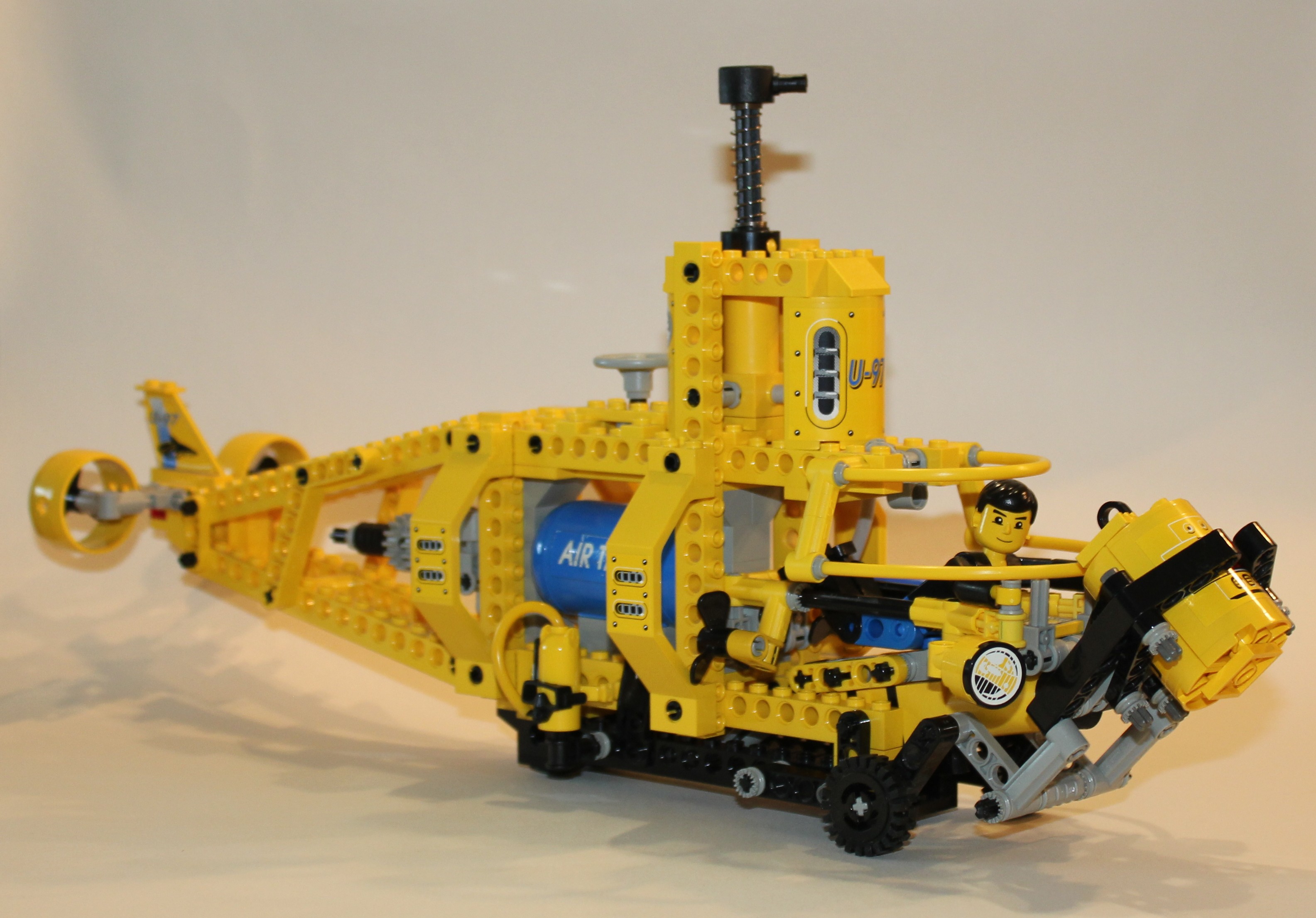
One of the great Technic sets of the late nineties, with pneumatics that still work, a diver figure that exists nowhere else and a great selection of parts.
History
I have to be upfront about something. I am almost certainly looking at this set through rose tinted nostalgia glasses. I did not own this set as a kid. It belonged to my cousin, who was two years older than me and every time I visited him I would build it, take it apart and build it again. I borrowed it home whenever I could. It was just one of those sets that lived in my mind permanently as the idea of what a Technic set should feel like.
I have not built it in over twenty years. Recently though I got lucky and tracked down not one, not two, not three but four copies through various second hand platforms. Some had a missing figure, some a missing sticker, one was almost complete. But I now have at least one fully complete set. So let’s find out if it actually holds up or if it is just a very good memory.
By 1997 Technic was in full swing, pushing hard on what bricks could do mechanically. Pneumatics had been part of the lineup since the mid eighties but LEGO had refined the system a lot by the late nineties. Those grey and blue tubes showed up across the range and kids had come to associate it with a certain kind of satisfying mechanical building experience.
The Search Sub came out in 1997 as both Search Sub #8250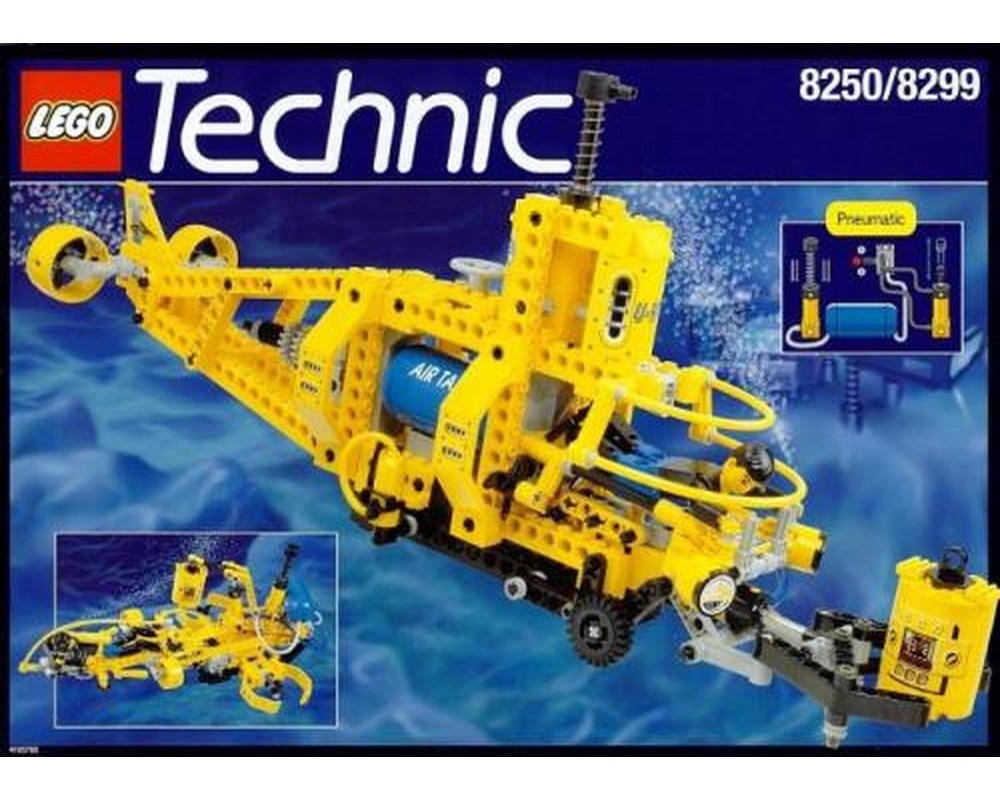 Search Sub
#8250 and the CD bundle Search Sub / Sub Aqua #8299 Search Sub / Sub Aqua
#8299. It is not a massive flagship like the Control Centre / Control II #8485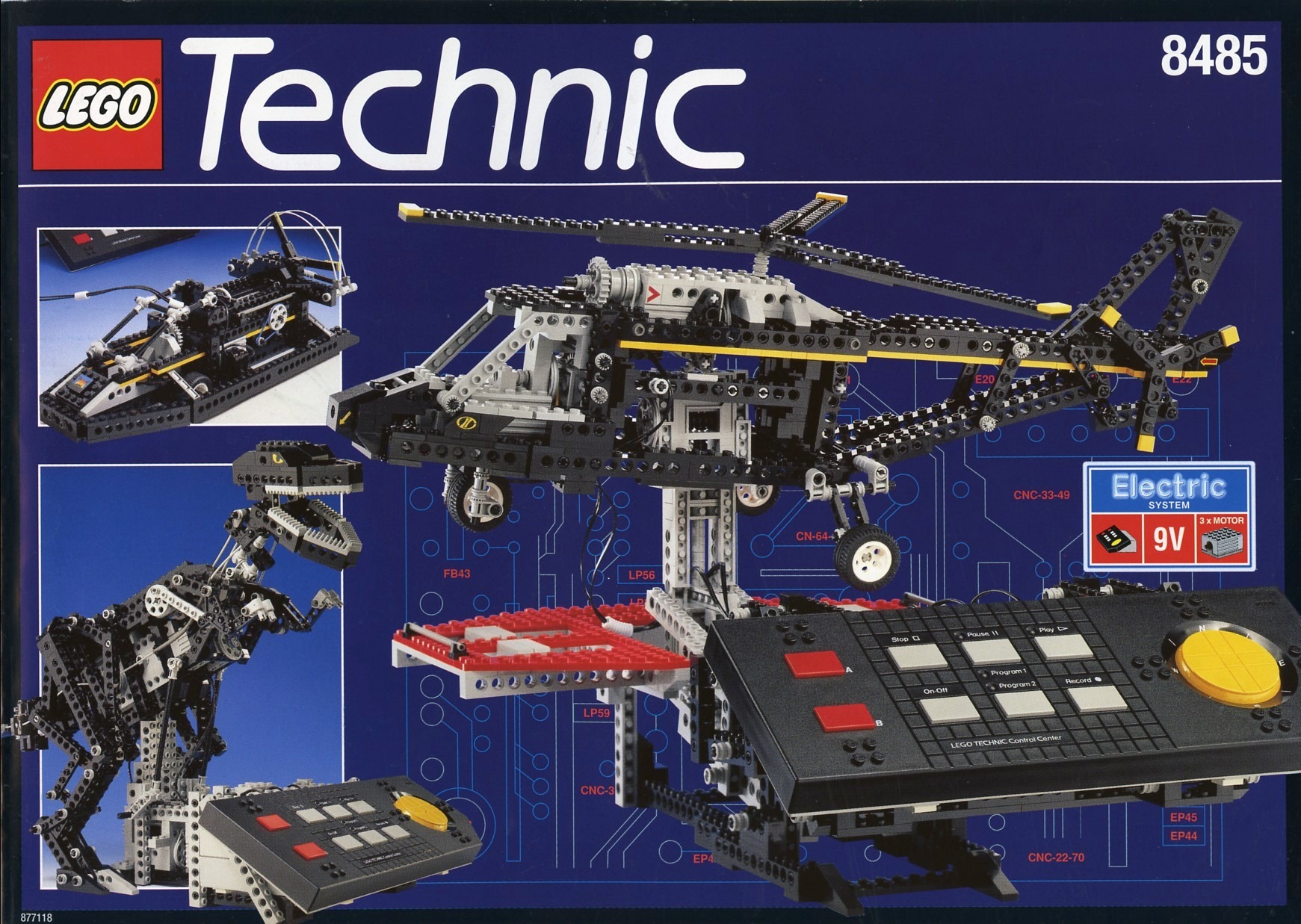 Control Centre / Control II
#8485 but it is not a bare bones beginner set either. It sits in a comfortable middle ground with mechanical ambition, a dedicated diver figure, and a pneumatic system that actually does something impressive. The set cost around fifty dollars at launch. This set shows up on second hand sites pretty regularly even today, which usually means it was made in good numbers and actually loved.
The 8299 is the same set but comes with a CD. On that CD are instructions for six extra micro models, all small, all optional. I did play with the CD back in the days, and it is possible to still find videos online demonstrating the features.
The Set and Its Place in the LEGO Lineup
The Search Sub is a Technic playset in the truest sense. It is not trying to be a museum piece or a hyper realistic engineering model. It is just trying to pack as much fun and play value as possible into 383 pieces, and it does that really well.
In 1997 this sat below the big flagship models like the Pneumatic Front-End Loader #8459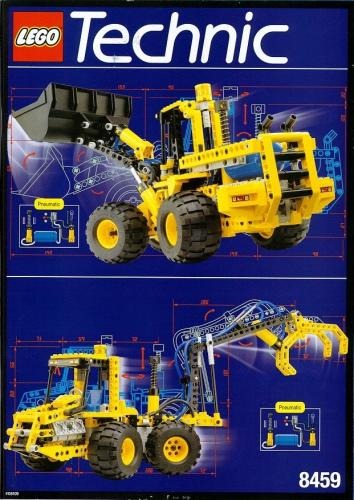 Pneumatic Front-End Loader
#8459 (~$80) or Barcode Multi-Set #8479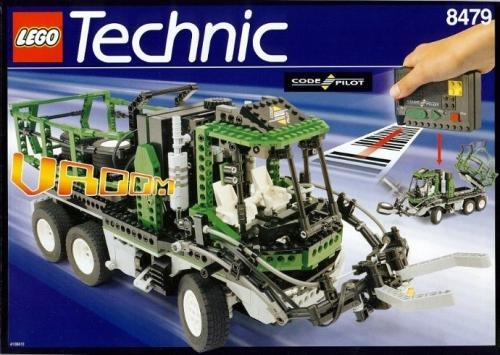 Barcode Multi-Set
#8479 (~$160) but well above the basic build like Mountain Rambler #8414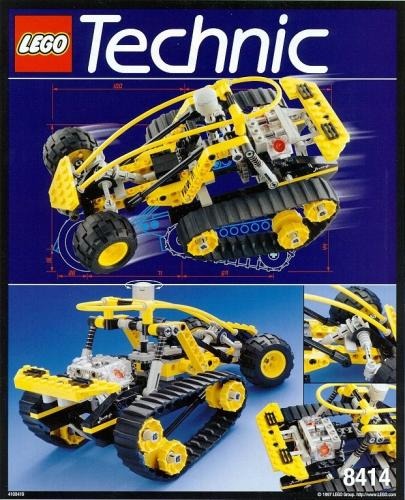 Mountain Rambler
#8414 (~$30) or Gyro Copter #8215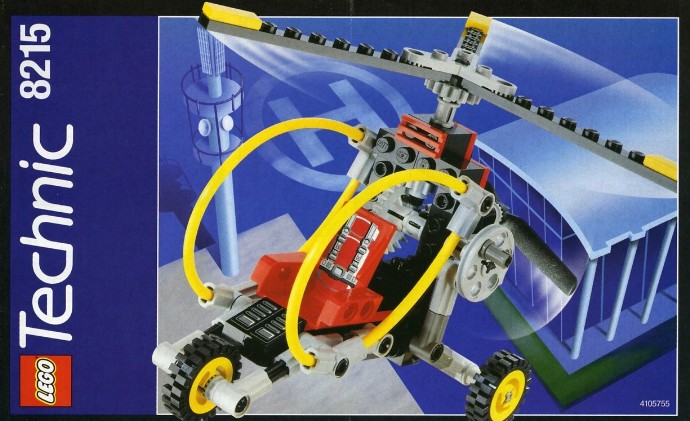 Gyro Copter
#8215 (~$8). For adult fans today it works as a display piece with real nostalgic value. For kids it is an absolute playground of moving parts and hidden mechanisms.
It is also, quietly, a great parts set.
What’s in the Box?
I do not have my own box to show you here. But the Search Sub came in classic late nineties Technic packaging, bold action photography on the front, yellow and black everywhere. Inside you get a yellow plastic tray divided into separate compartments. Beams in one section, connectors in another, and the blue air tank sitting in its own little cell like it knows it is special. LEGO often did this with special parts like motors. No numbered bags, no build stage sorting, just everything laid out and ready to go. It felt premium at the time and honestly it still has charm.
There are only a handful of stickers and they are used well, mostly on the body panels to add surface detail that would otherwise be missing on a purely mechanical build. One of them has the marking “U 97” on it, which could mean the year of release or the Danish word for submarine, Ubåd, combined with the year. I like that second theory. Either way it adds something.
The minifigure is a Technic diver. Technic figures had been around for years by this point, but this particular one with the scuba mask, flippers, and air tank is genuinely special.
Instructions Booklet
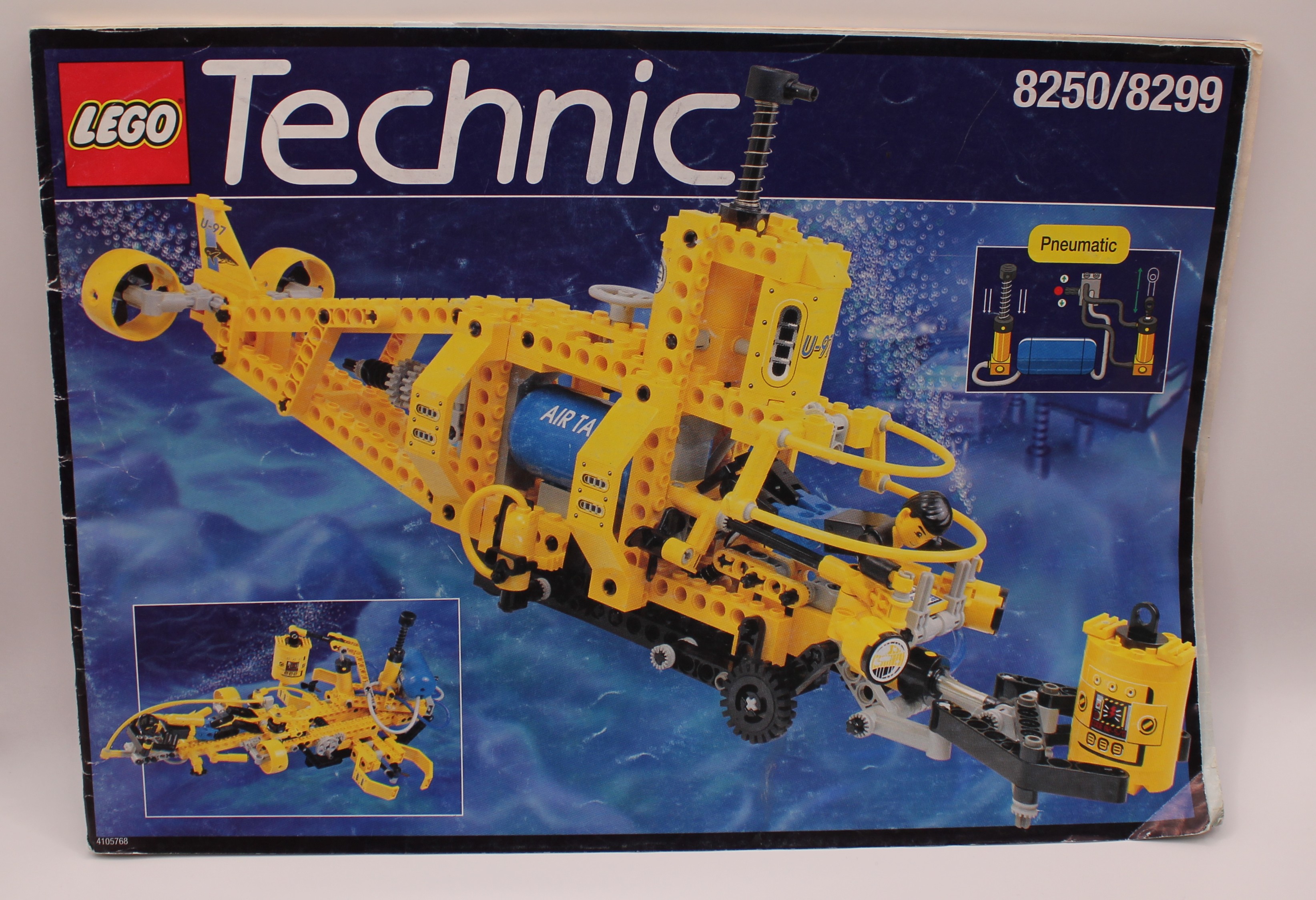
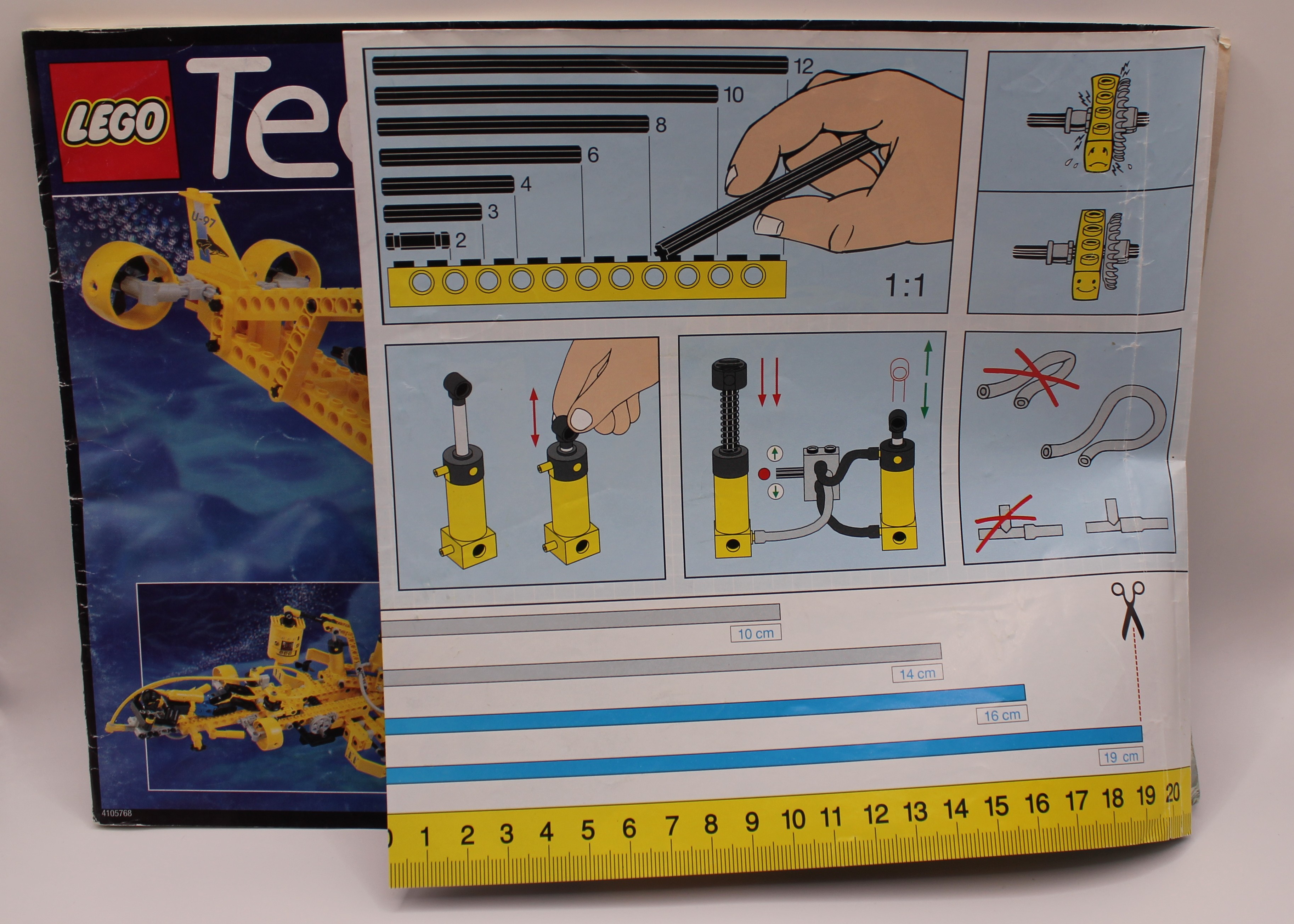
The booklet is a product of its time and that is a good thing. It opens with a fold out reference page I still find useful today: a 1:1 scale ruler for beams and axles, a guide to the different pneumatic hose lengths, and the classic happy and sad face cartoon about overtightening axles and gears. Every kid who built Technic in the nineties has that cartoon burned into their memory. I know I do.
Steps in late nineties Technic booklets are loaded with parts. A modern set might add three or four pieces per step to keep things manageable. This booklet hands you a dozen pieces and just expects you to figure it out. It is not bad, it just demands your attention. You cannot build this one on autopilot. The upside is that the build moves fast and feels like something is actually happening.
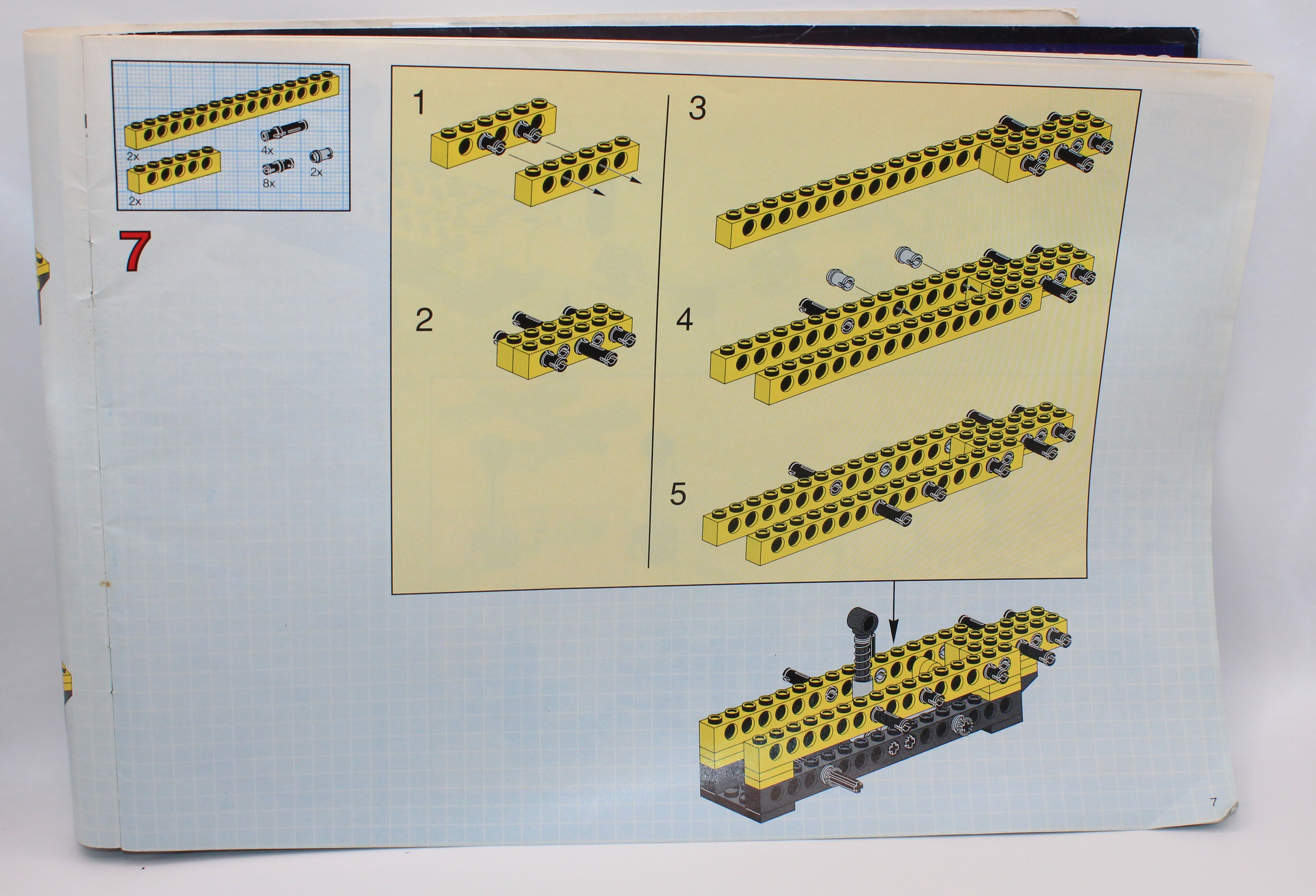
The booklet is decent at signalling what is coming. The spring goes in at step 3 and makes no sense until the grabber assembly comes together several steps later. The instructions trust you to follow along. That works fine for the audience this was aimed at.
At the back you get something that feels almost impossible by today’s standards. Real photography of the finished sub with function callouts, and a proper action shot of the B model. No renders. Just actual photos of real models with arrows pointing at moving parts.
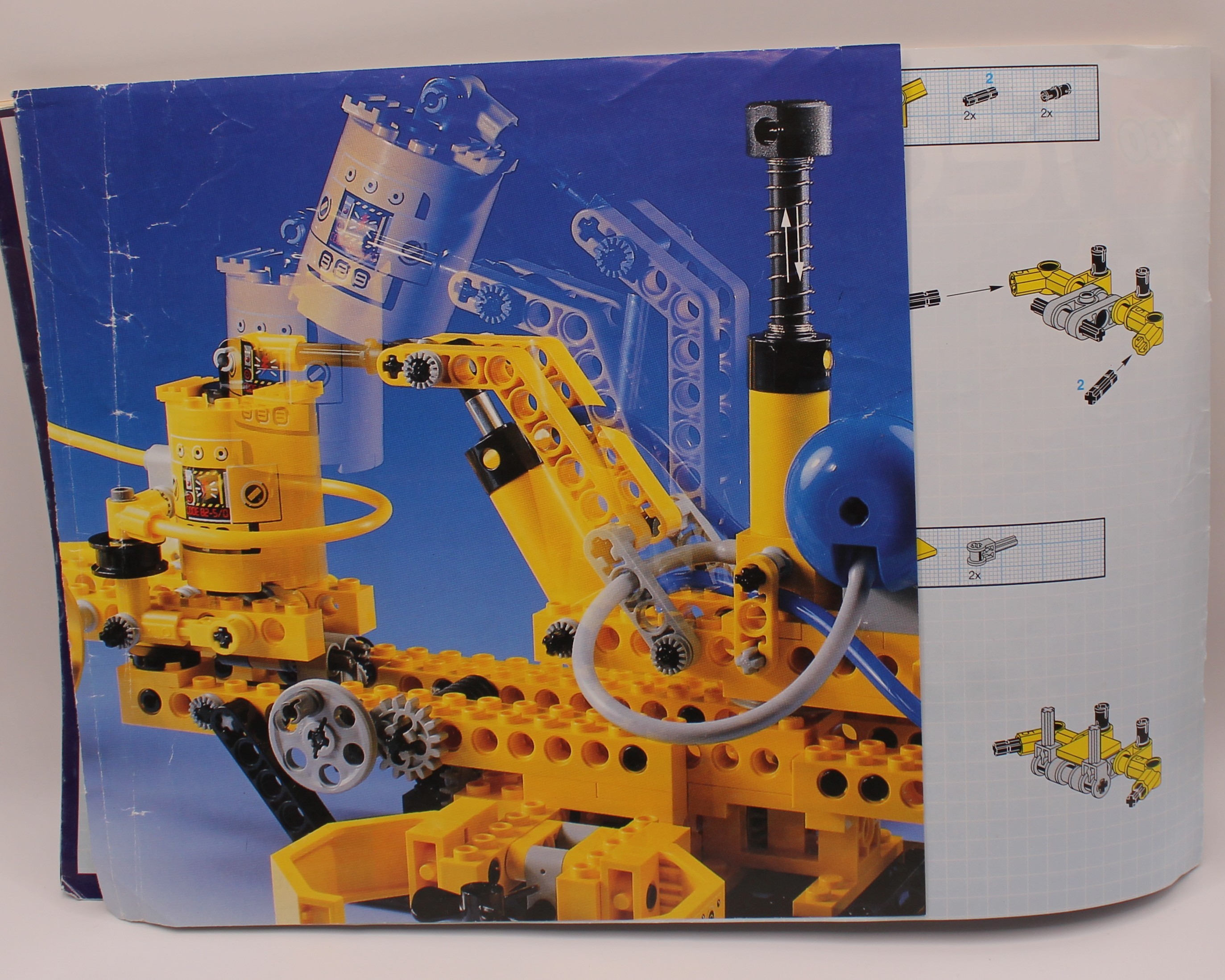
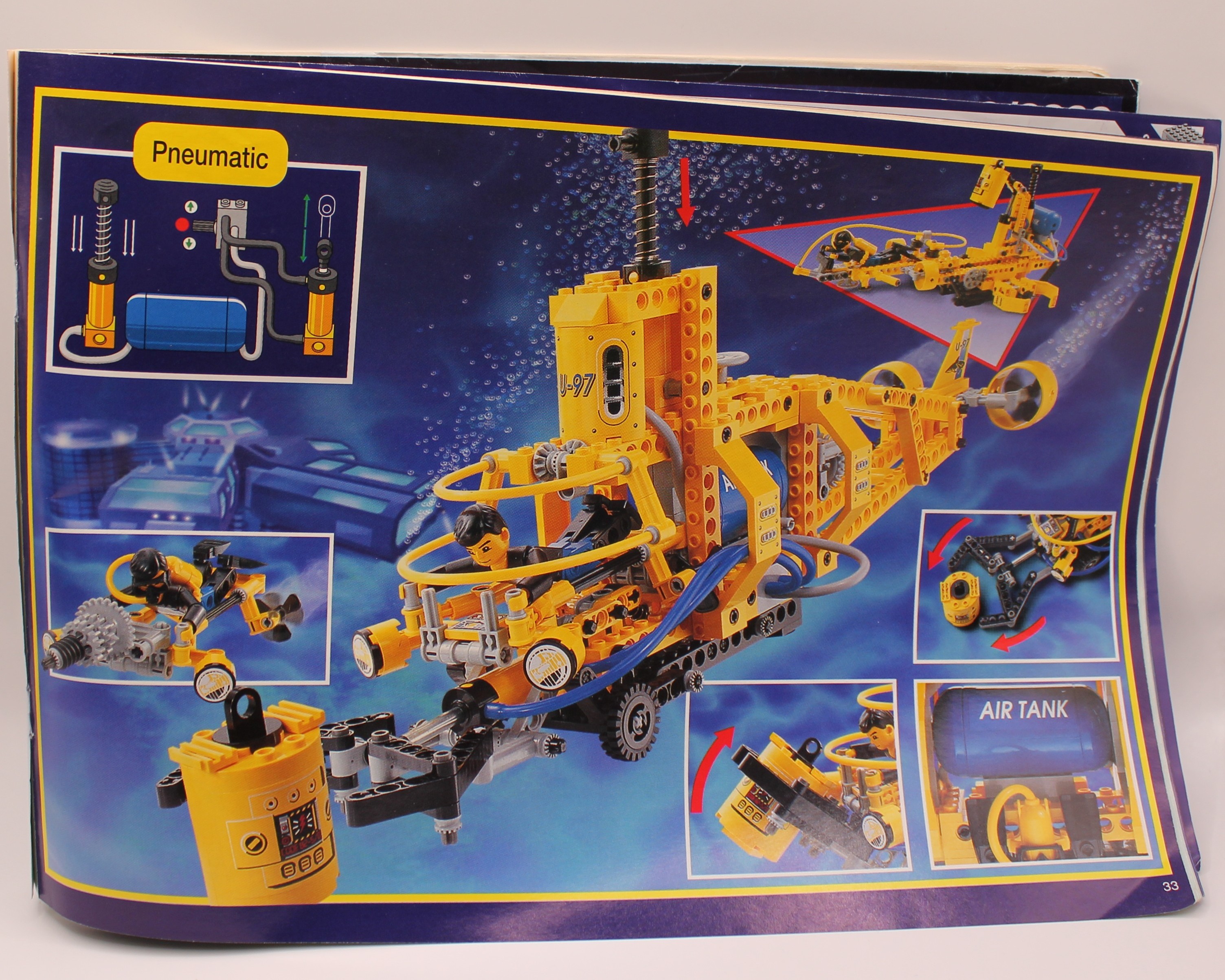
This style of booklet production disappeared when digital rendering got cheap and consistent. Looking at it now there is something really tangible about it. You can see how the parts actually sit in real light.
Parts Breakdown
This is where the Search Sub really shines, especially when you think about what was available in 1997.
New Molds
New Color Combinations


![Technic Figure Blue Legs, Black Top with Zippered Wetsuit Print [Diver]](/images/parts/2698c01pr0002_9999.jpg)
Rare Parts
Some of these parts might seem common today, but in 1997 they were still pretty rare and hard to get. The total sets they appear in by the time Search Sub was released is noted in the description.
 Pneumatic Front-End Loader
#8459 (2 total sets in 1997)
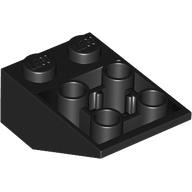 Control Centre / Control II
#8485 (4 total sets)
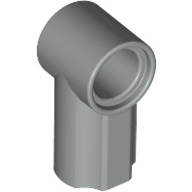
 V-TOL
V-TOL#8222 and Gyro Copter #8215
Gyro Copter#8215 (4 total sets)
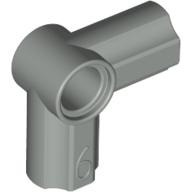 Gyro Copter
#8215 and V-TOL #8222
V-TOL#8222 (4 total sets)
![Technic Brick 1 x 2 [2 Pin Holes]](/images/parts/32000_7.jpg)
 3 In 1 Car / Amphipower
#8286 (4 total sets)
 Pneumatic Front-End Loader
#8459 (2 total sets)
 Mountain Rambler
#8414 (2 total sets)
 Pneumatic Front-End Loader
#8459 (2 total sets)
 3 In 1 Car / Amphipower
#8286 (3 total sets)

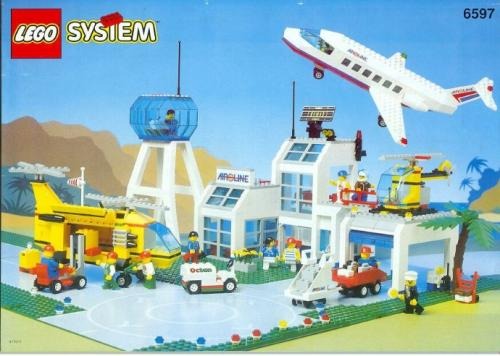 Century Skyway
#6597 (4 total sets)
What Stands Out
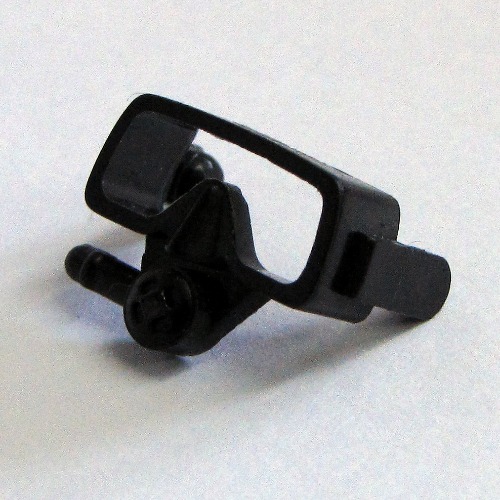
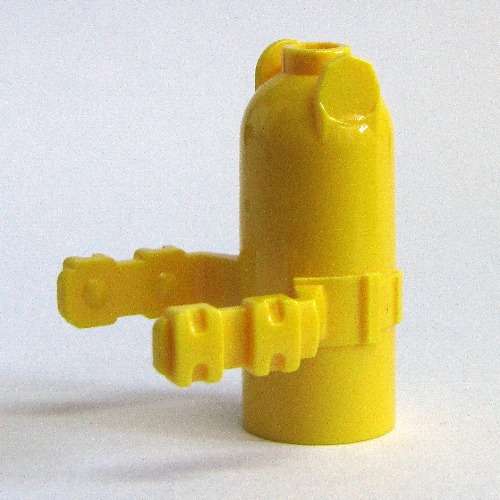
The diver accessories are the headliner here. The Technic Figure Scuba Mask
Black
Technic Figure Scuba Mask
Black
and Technic Figure Airtank
Yellow
Technic Figure Airtank
Yellow
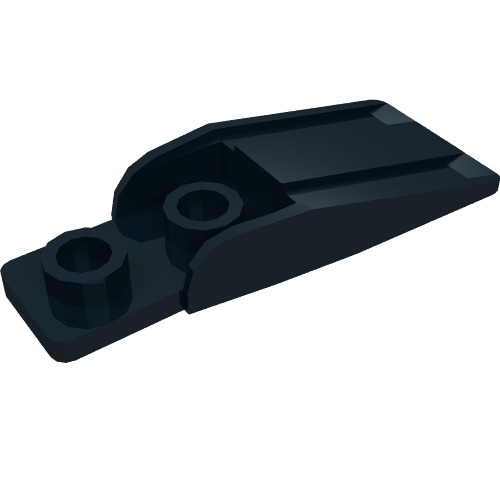
are still to this day exclusive to the Search Sub. The Technic Figure Scuba Flipper
Black
Technic Figure Scuba Flipper
Black
is exclusive in Black
too. It showed up once more in White
in the 2009 Galactic Enforcer #5974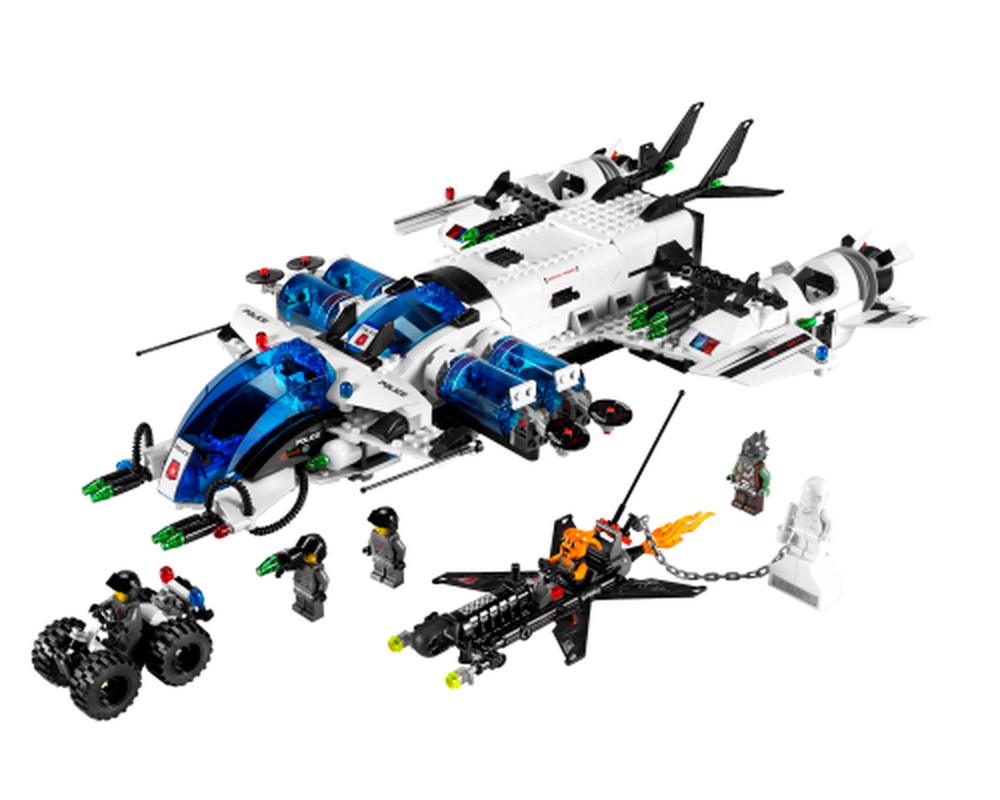 Galactic Enforcer
#5974 as engine flaps of all things, and then disappeared again. Together the three parts make the diver figure a complete kit and it is kinda surprising LEGO never reused any of them.
The figure itself has a printed upper body: Technic Figure Blue Legs, Black Top
Technic Figure Blue Legs, Black Top with Zippered Wetsuit Print [Diver]
, while the legs each have a small sticker.
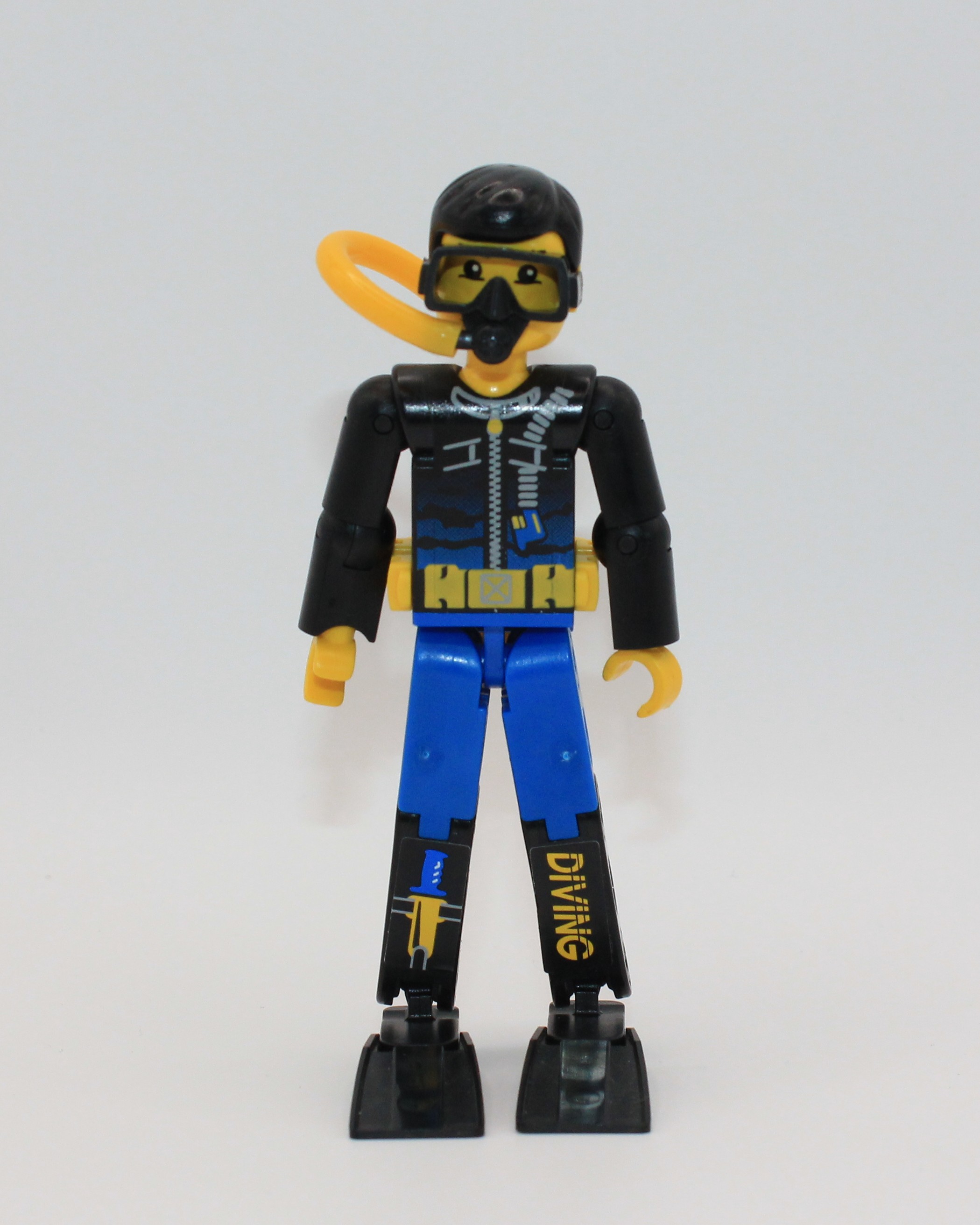
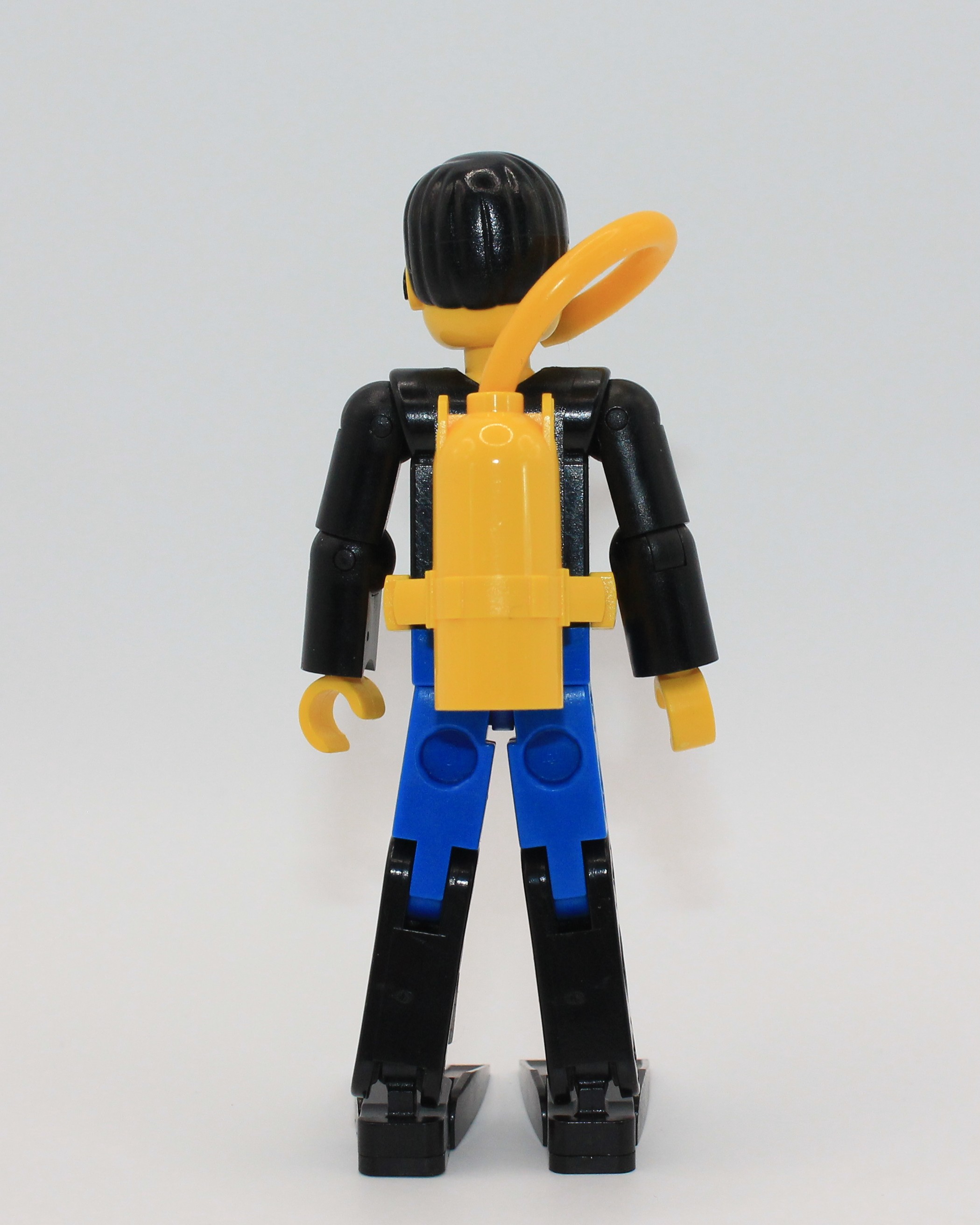
This is the only diver in the whole Technic figure era. Most Technic figures were drivers of some kind or another, so having a proper diver with a full wetsuit print is a great selling point of the set and makes it kinda unique.
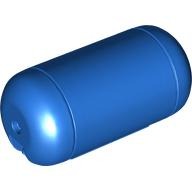
The part that most LEGO fans of a certain age will get emotional about is the Pneumatic Airtank
Blue
Pneumatic Airtank
Blue
. In 1997 it existed in just two sets. The other was the Pneumatic Front-End Loader #8459Pneumatic Front-End Loader
#8459. Across its whole production life the blue air tank showed up in eight sets total before being retired, with the Front End Loader #8439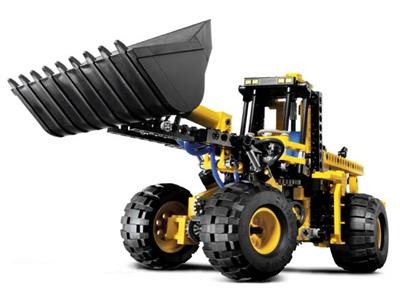 Front End Loader
#8439 from 2004 being one of the last. It is not just visually great. It holds pressure for a long time, so you can pump it up and the grabber stays active without constant repumping. For a play feature from the late nineties that is impressive.
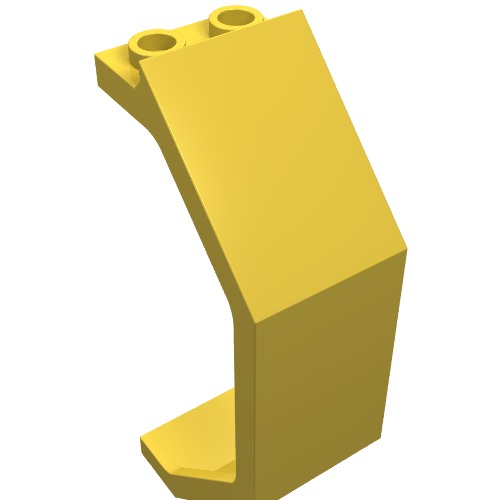
The Panel 3 x 2 x 6
Yellow
Panel 3 x 2 x 6
Yellow
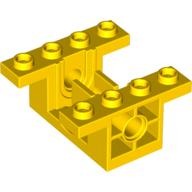
debuted in this color here. Same with the Gearbox 4 x 4 x 1
Yellow
Gearbox 4 x 4 x 1 2/3 with 1 x 2 Cutouts, Pin Holes
Yellow
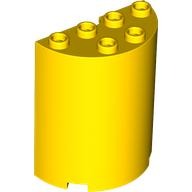
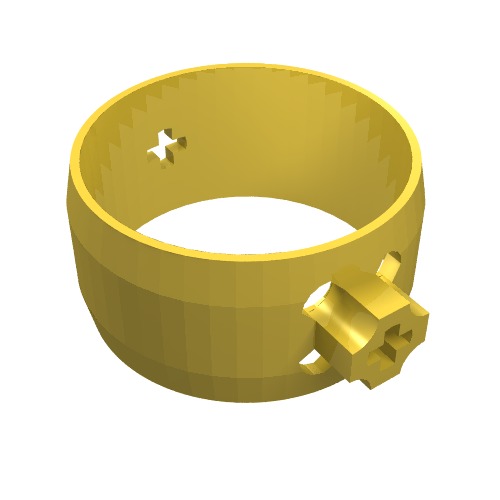
and the Technic Cylinder 4 x 4 x 1 2/3
Yellow
Technic Cylinder 4 x 4 x 1 2/3 with Axle Holes
Yellow
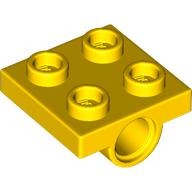
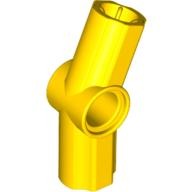
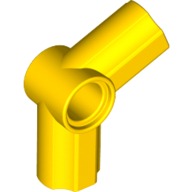
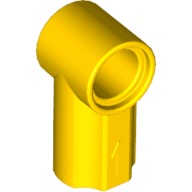
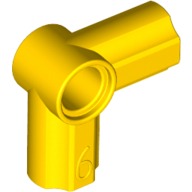
. The Technic Axle and Pin Connector Angled #1
Yellow
Technic Axle and Pin Connector Angled #1
Yellow
debuted in yellow here too and in 1997 had only appeared in one other set, the Pneumatic Front-End Loader #8459Pneumatic Front-End Loader
#8459.
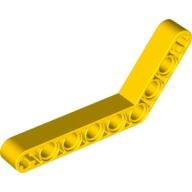
On the rare parts side the Technic Beam 1 x 9 Bent (6 - 4) Thick
Yellow
Technic Beam 1 x 9 Bent (6 - 4) Thick
Yellow
does a lot of structural work and shapes the sub’s silhouette in a way straight beams cannot. It appeared in just three sets at the time alongside the 3 In 1 Car / Amphipower #82863 In 1 Car / Amphipower
#8286 and the Mountain Rambler #8414Mountain Rambler
#8414. It has since shown up in more sets including the 2025 Deep-Sea Research Submarine #42201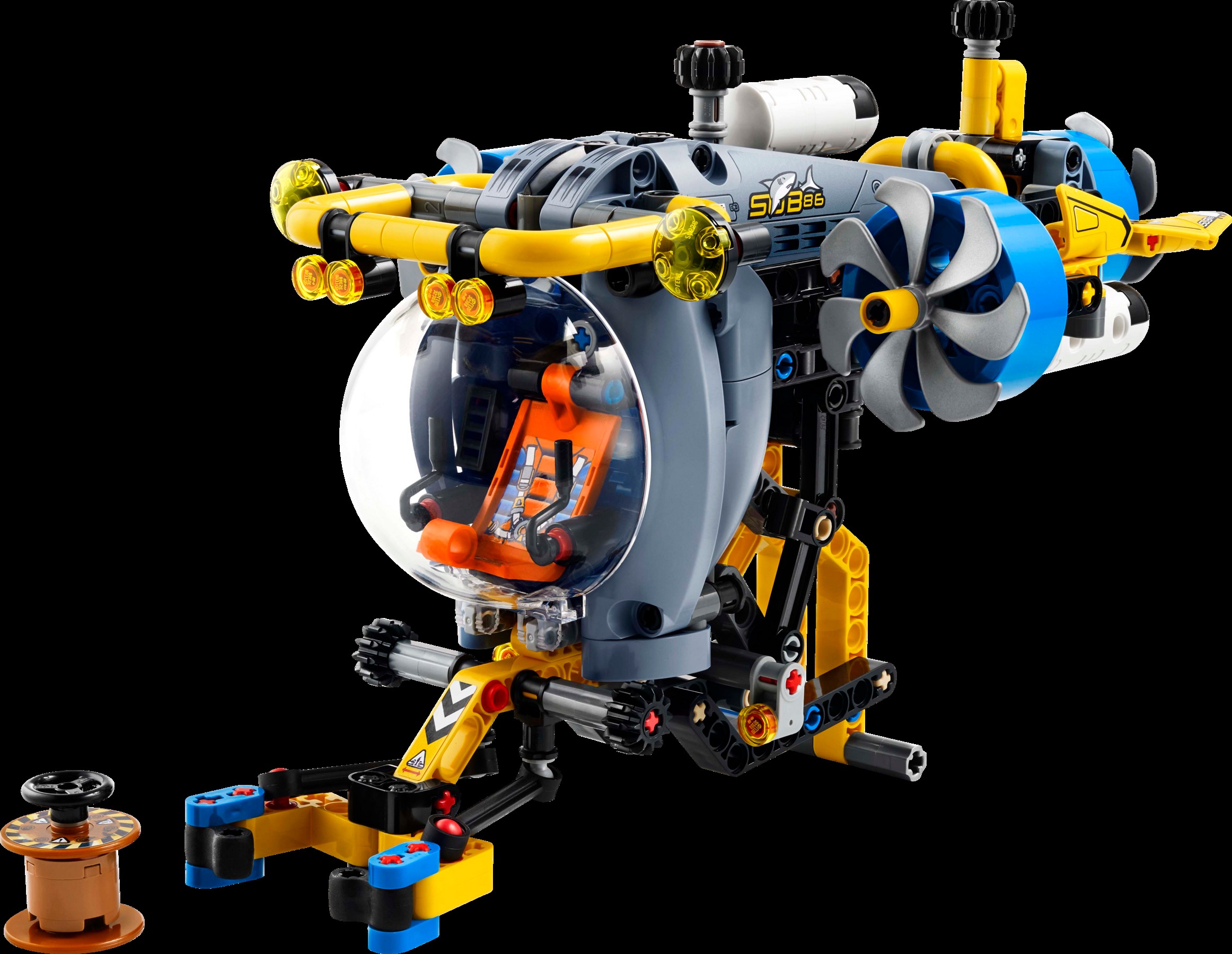 Deep-Sea Research Submarine
#42201, which is a nice bit of thematic continuity.
The Build Experience
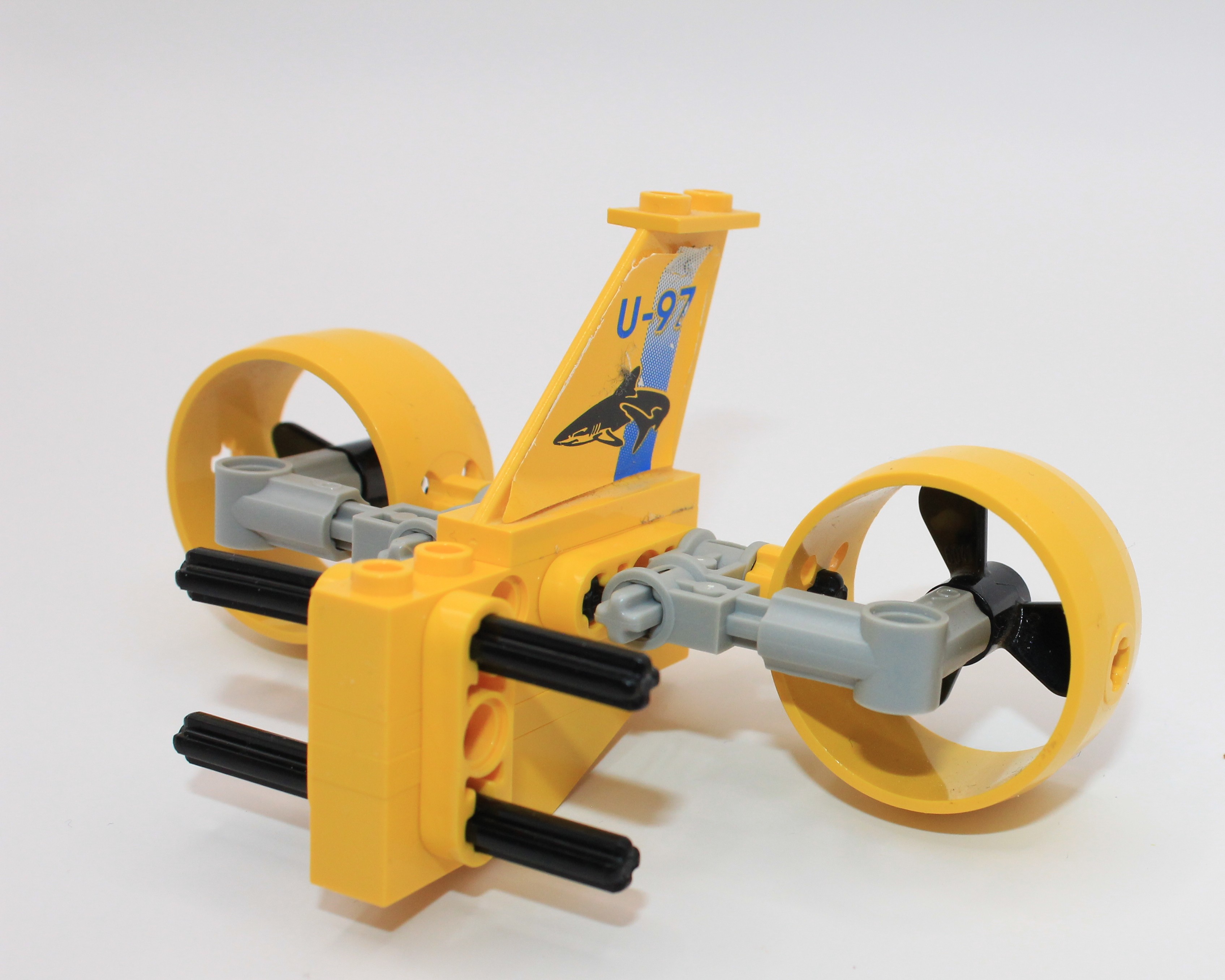
The build starts with the small search sub, a compact one person vehicle the diver figure can ride.
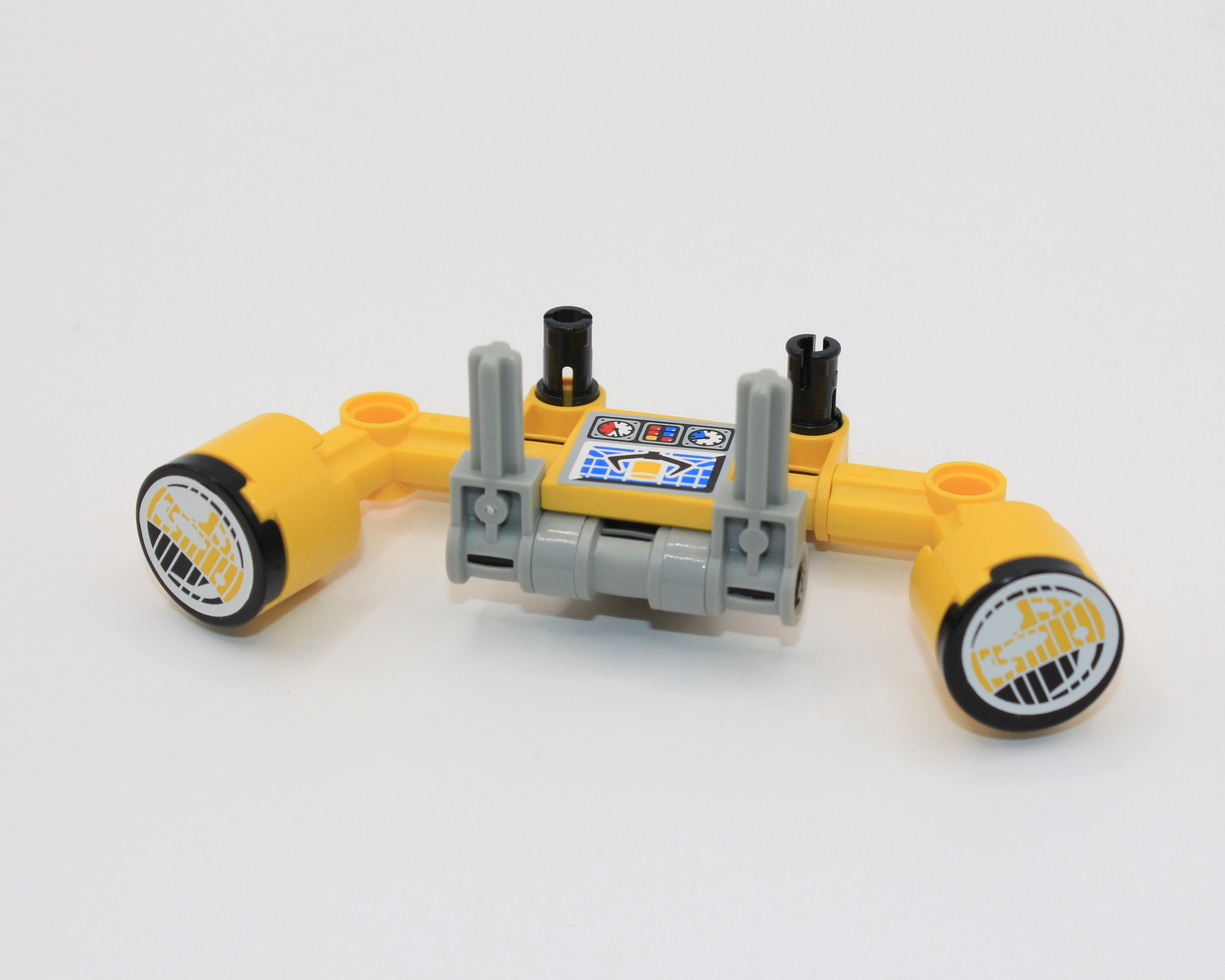
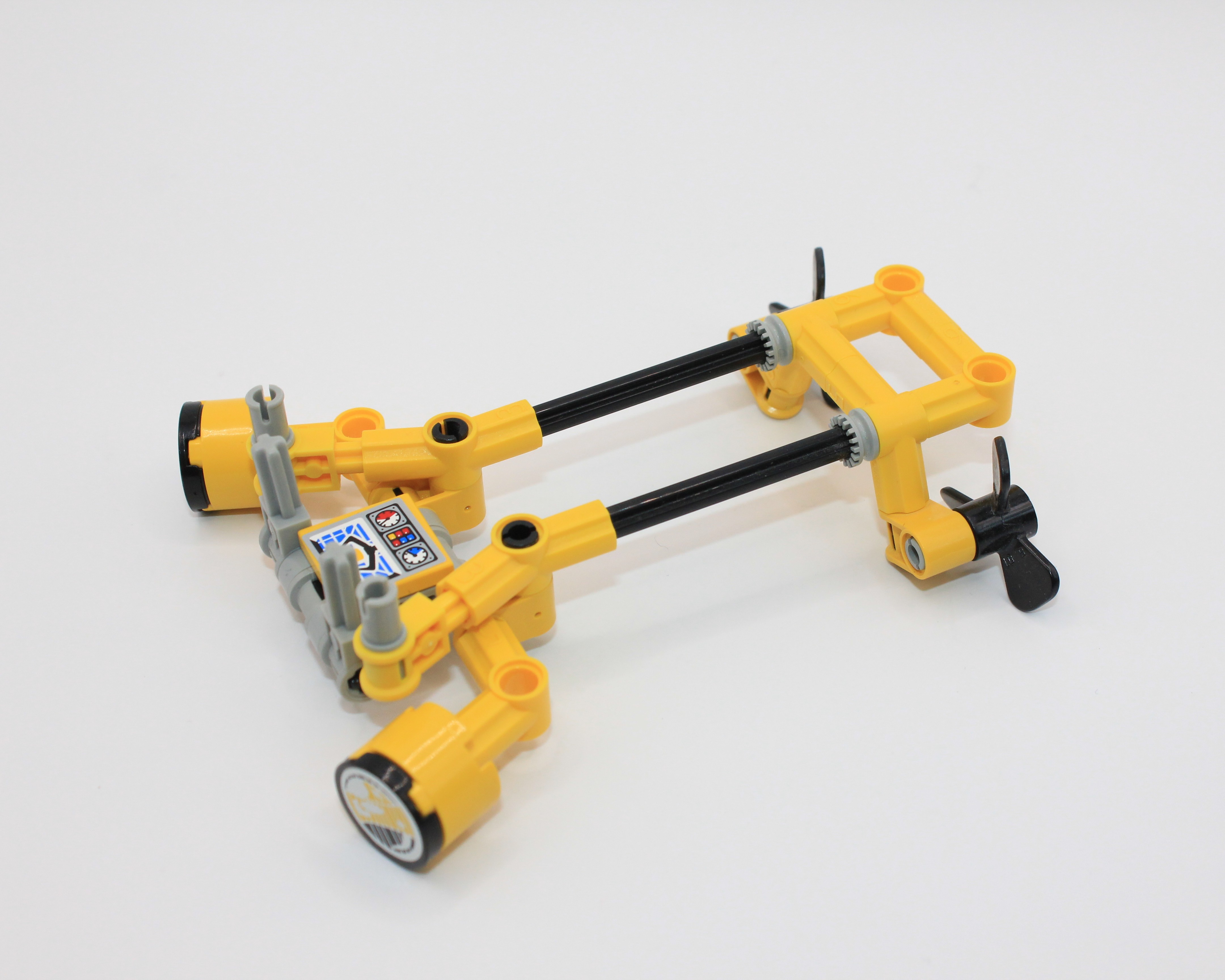
It goes together fast, uses three stickers, and has a pair of spinning rudders that give it a sense of motion even when it is just sitting there. Good warm up for what comes next.
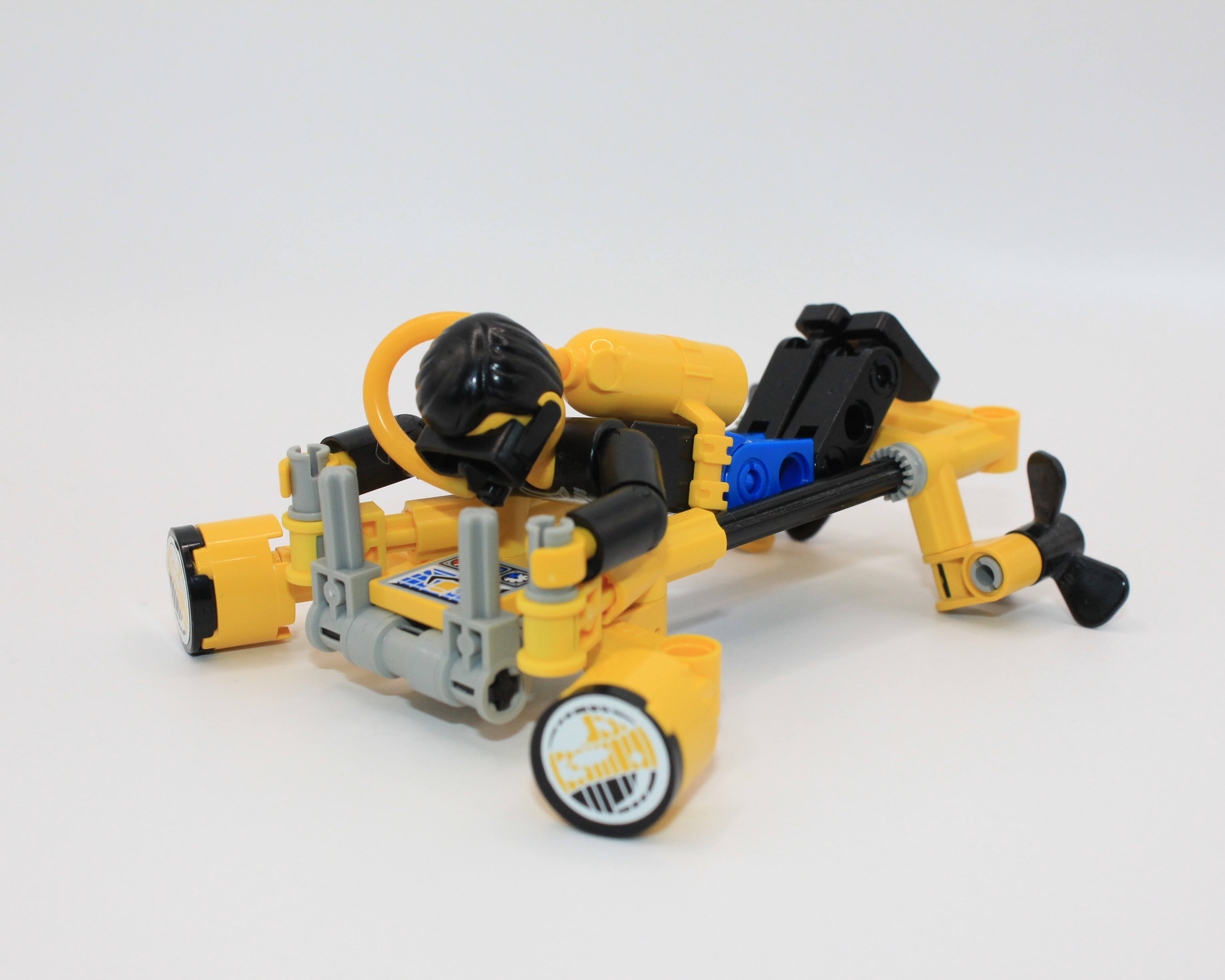
Then the main submarine starts and right away you get one of the quiet pleasures of this build: the classic half toothed Technic bush Technic Bush 1/2 Toothed Type II
Light Gray
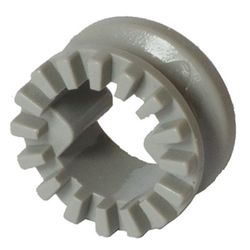 Technic Bush 1/2 Toothed Type II [X Opening]
Light Gray
. These parts carry a real old school charm. They feel like a direct connection to the Technic sets I grew up around.
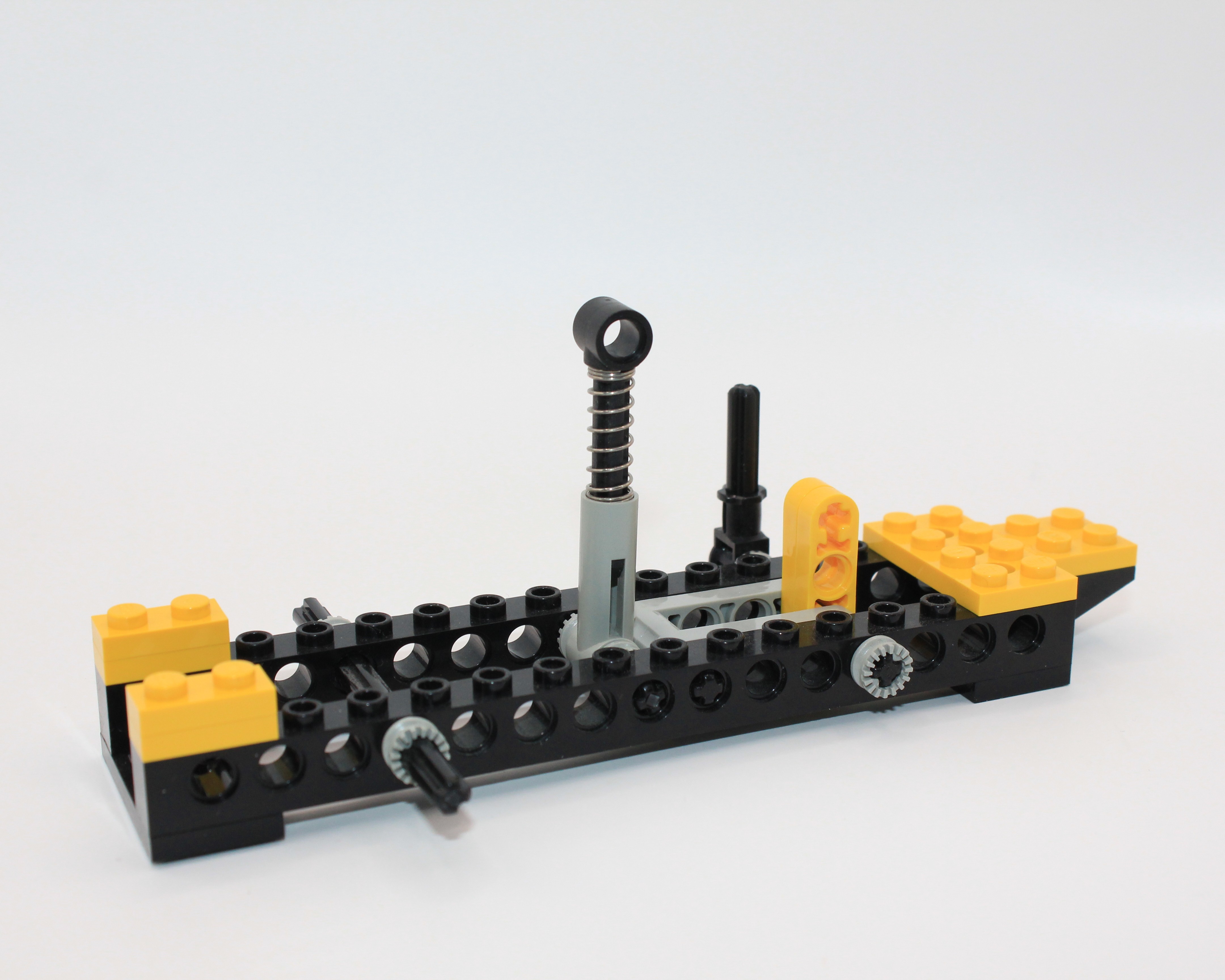
Step 3 already has you adding the spring that will tension the front grabber later.
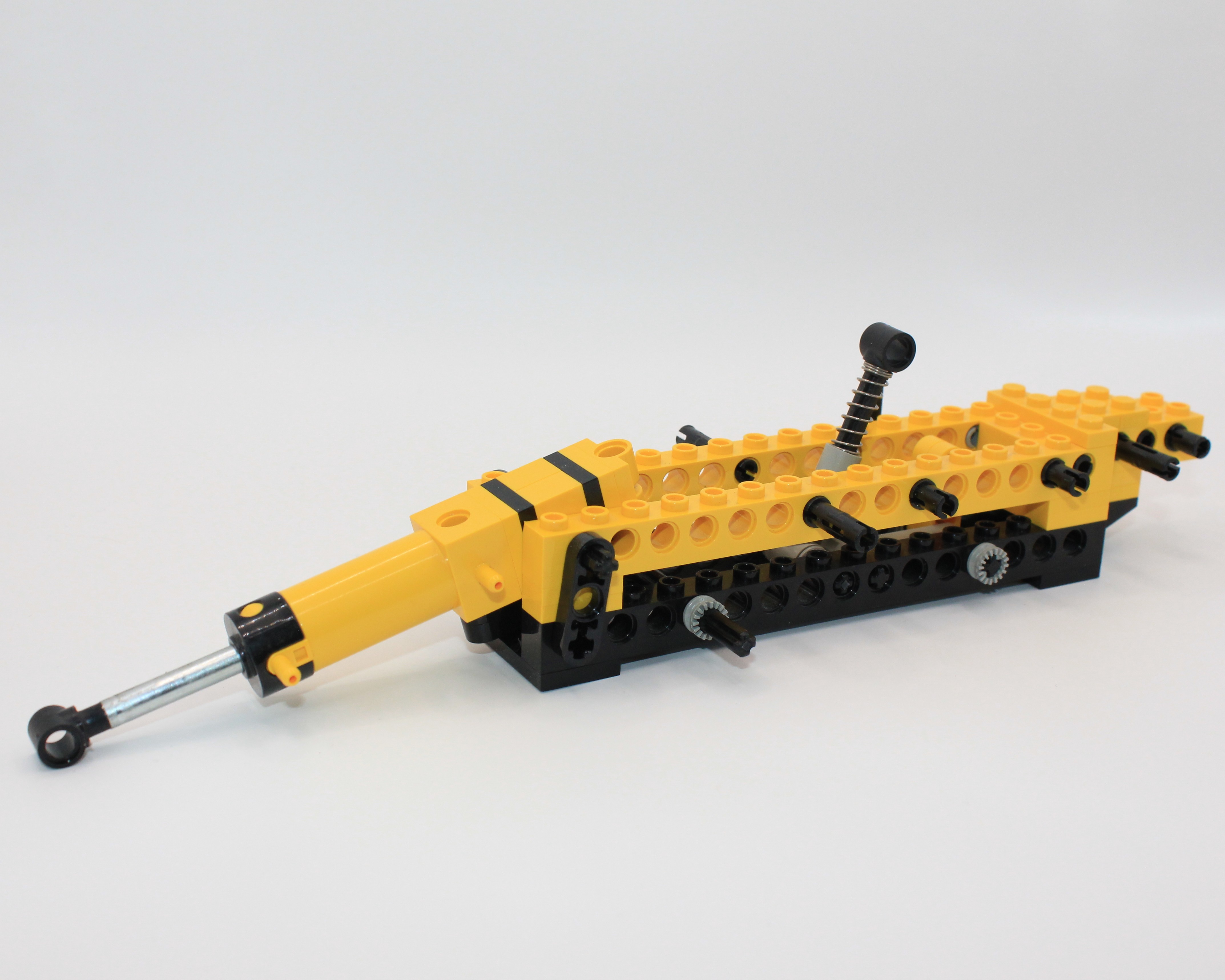
Step 8 brings in the first pneumatic piston and by step 10 you have a recognisable base. The build moves fast. That is one of the pleasures of older Technic sets.
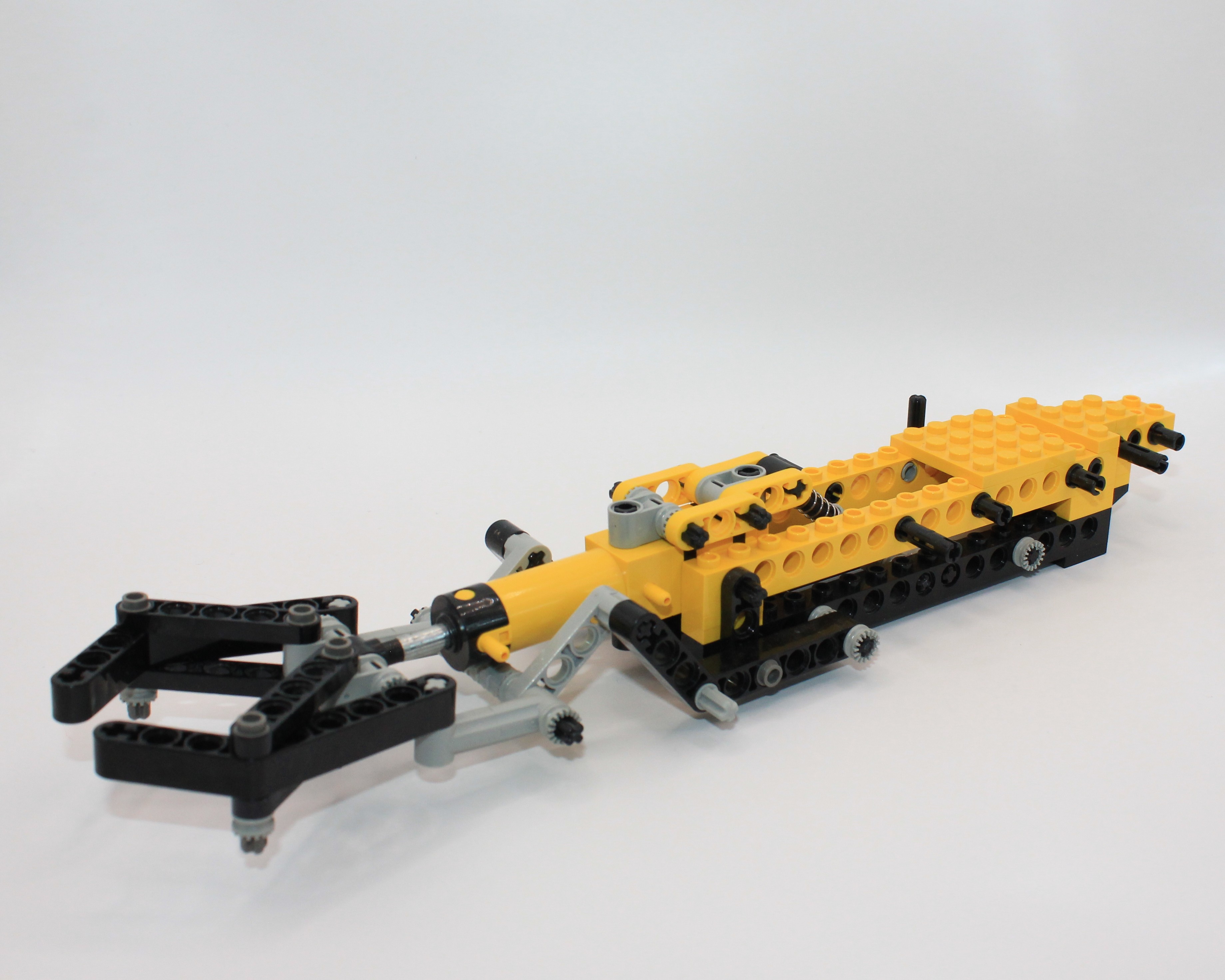
Step 16 closes out the lower hull. The grabber attaches and the spring snaps into its role, holding the mechanism open by default and pushing back when you actuate the piston. The moment all three things work together is actually satisfying.
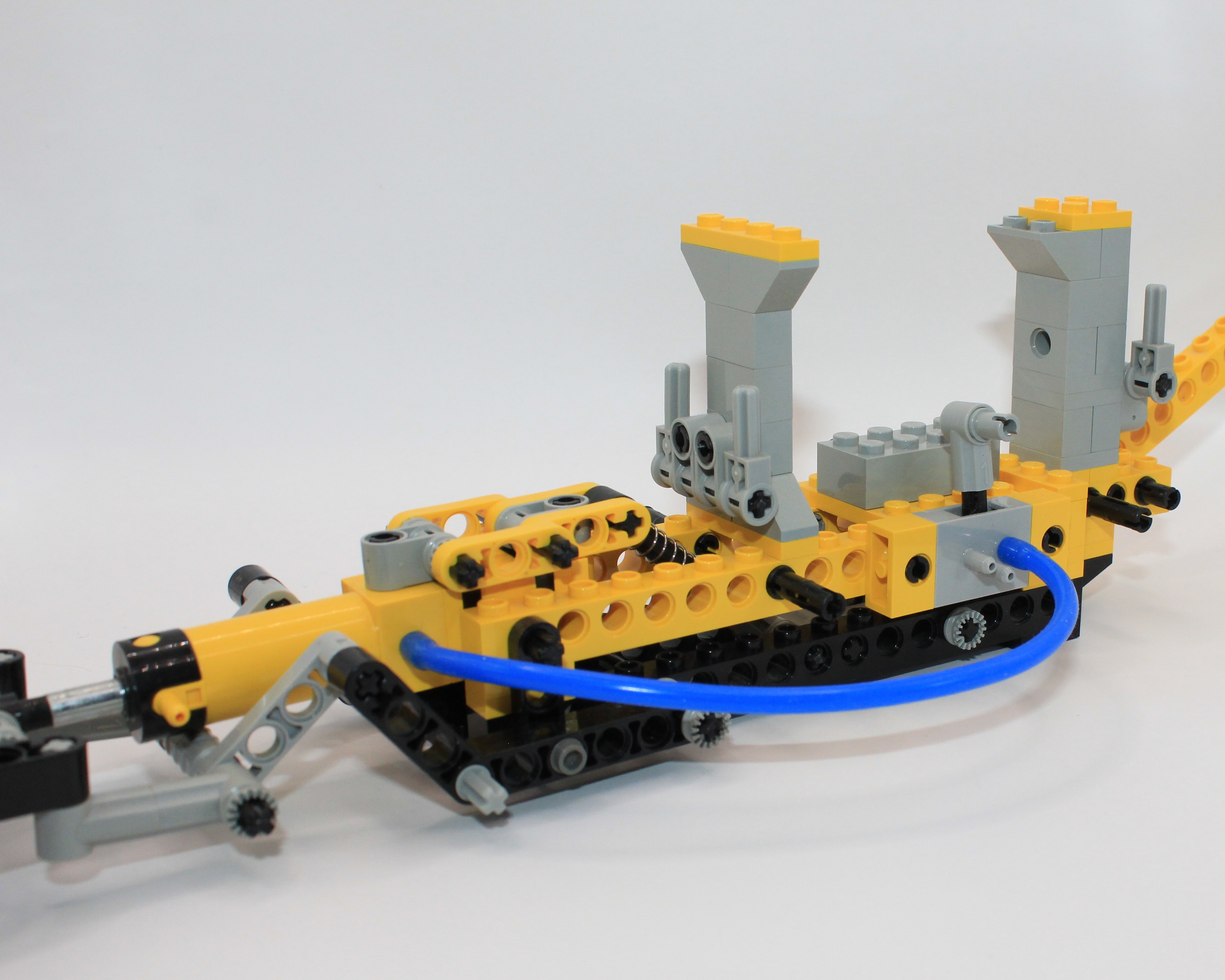
Step 17 adds the Pneumatic Switch
Light Gray
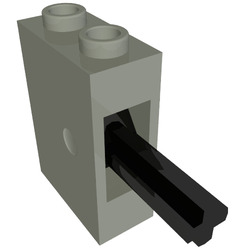 Pneumatic Switch with Top Studs
Light Gray
airflow regulator. This is the valve that decides which piston gets the air. It is a small part but it is the thing that makes the pneumatic system feel interactive. Without it you just have a pump. With it you have something to actually control.
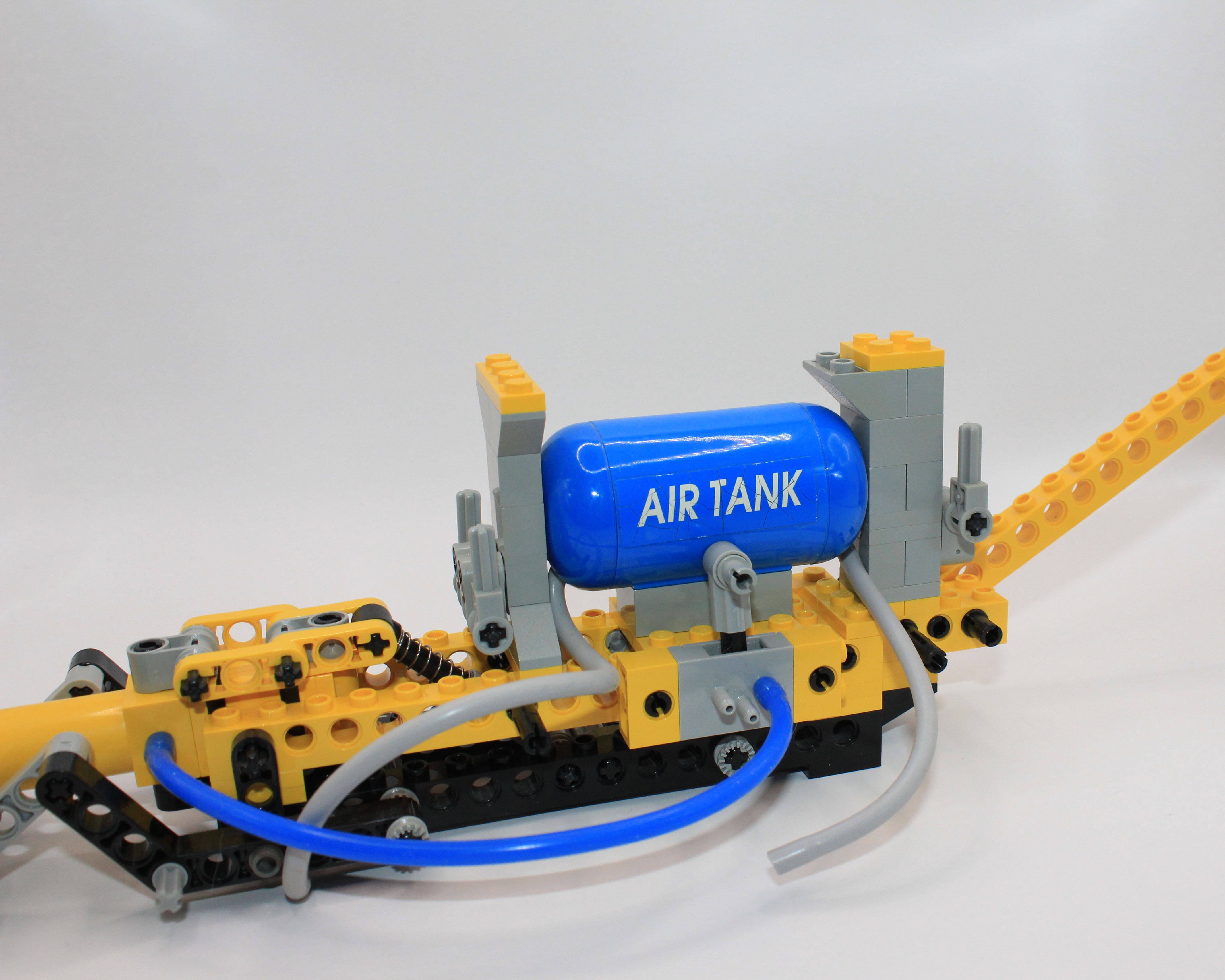
Step 20 is when the blue air tank goes in. I remember this moment from building my cousin’s set as a kid. Something about snapping that tank in and knowing it was going to hold pressure and actually power the grabber made the whole build feel real.
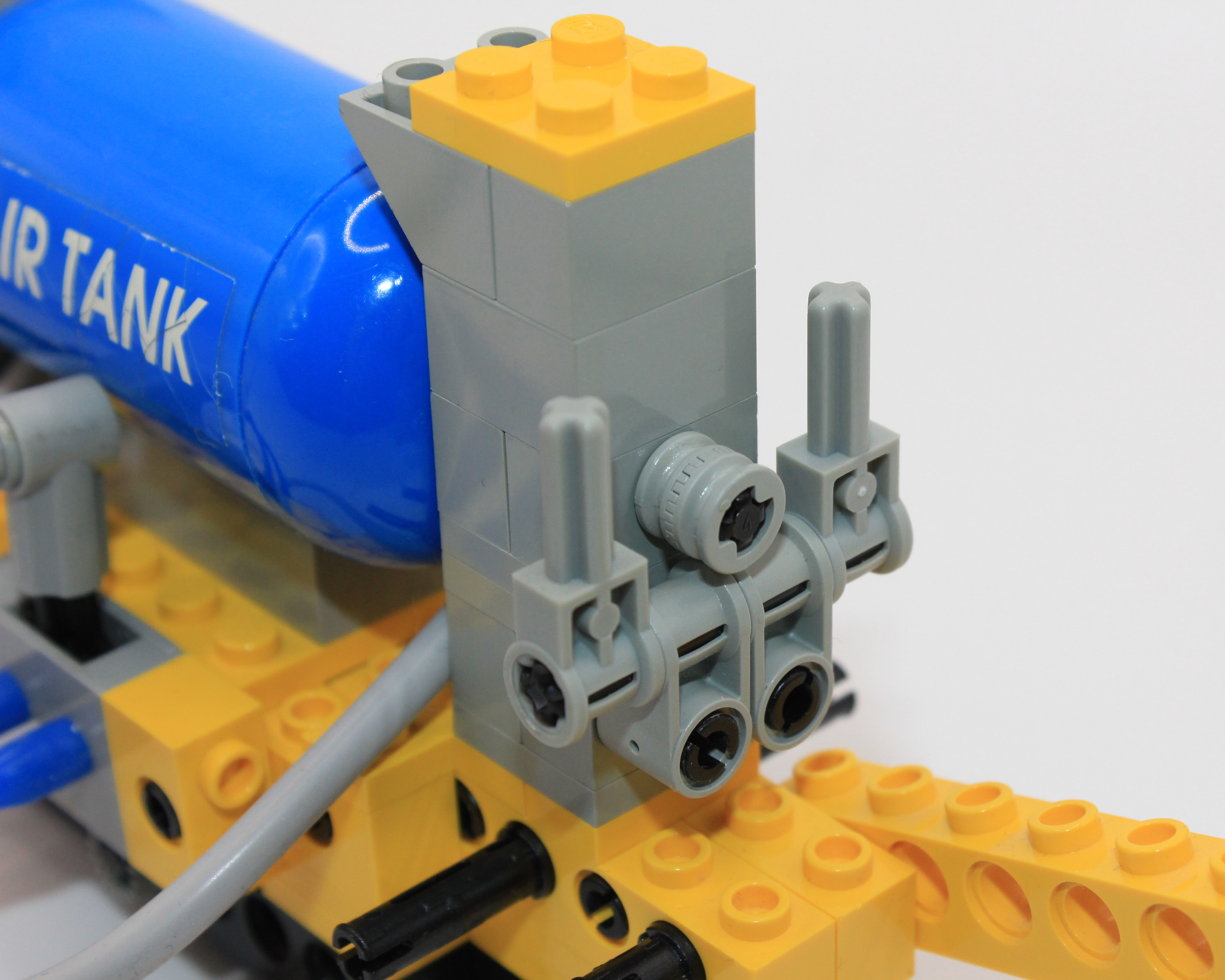
Step 21 uses two Technic Bush 1/2 Toothed Type II
Light Gray
Technic Bush 1/2 Toothed Type II [X Opening]
Light Gray
to interlock with each other, creating a connected assembly that is compact and stable. Small detail. Good design. The pin also connects to the air tank and helps hold it in place.
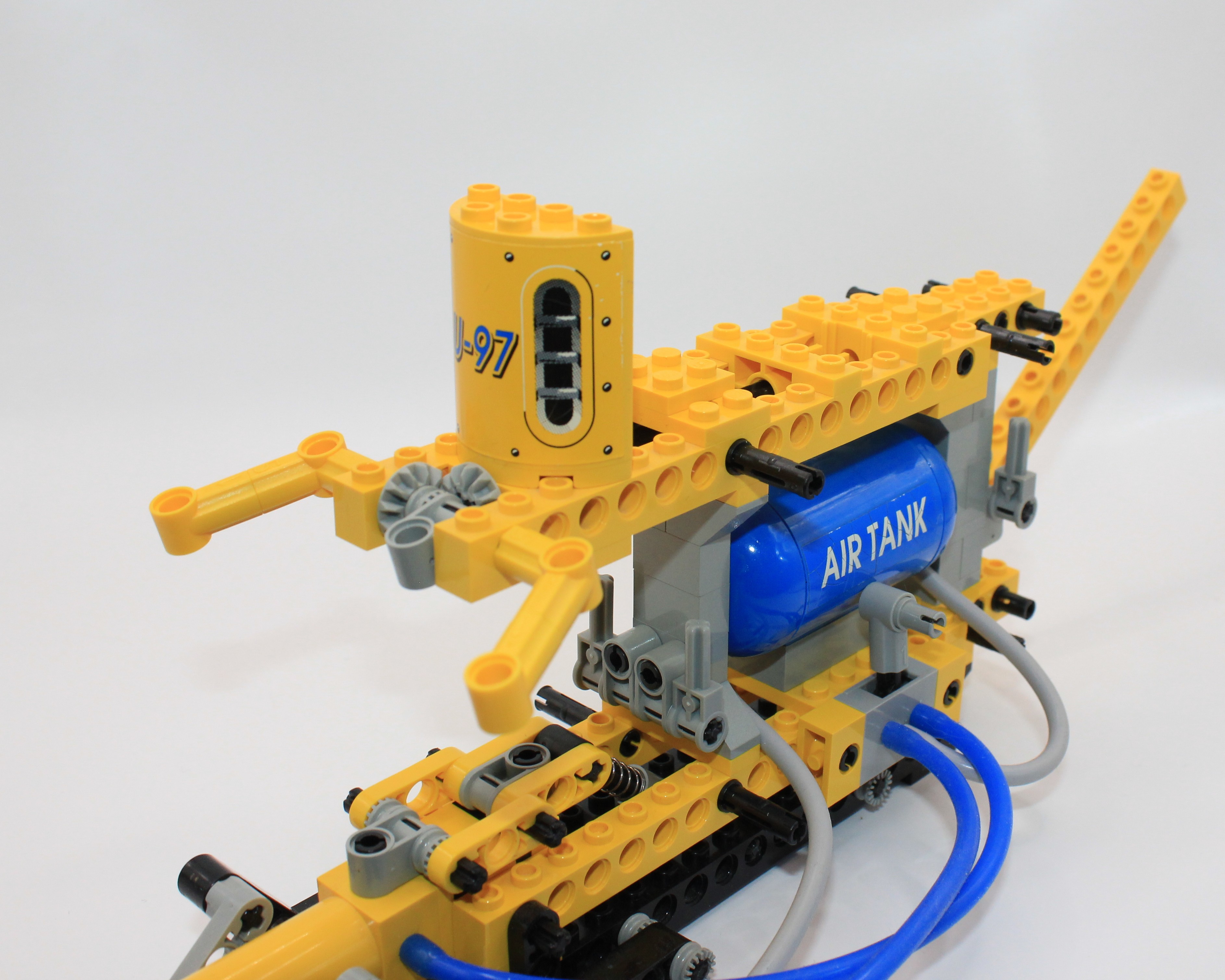
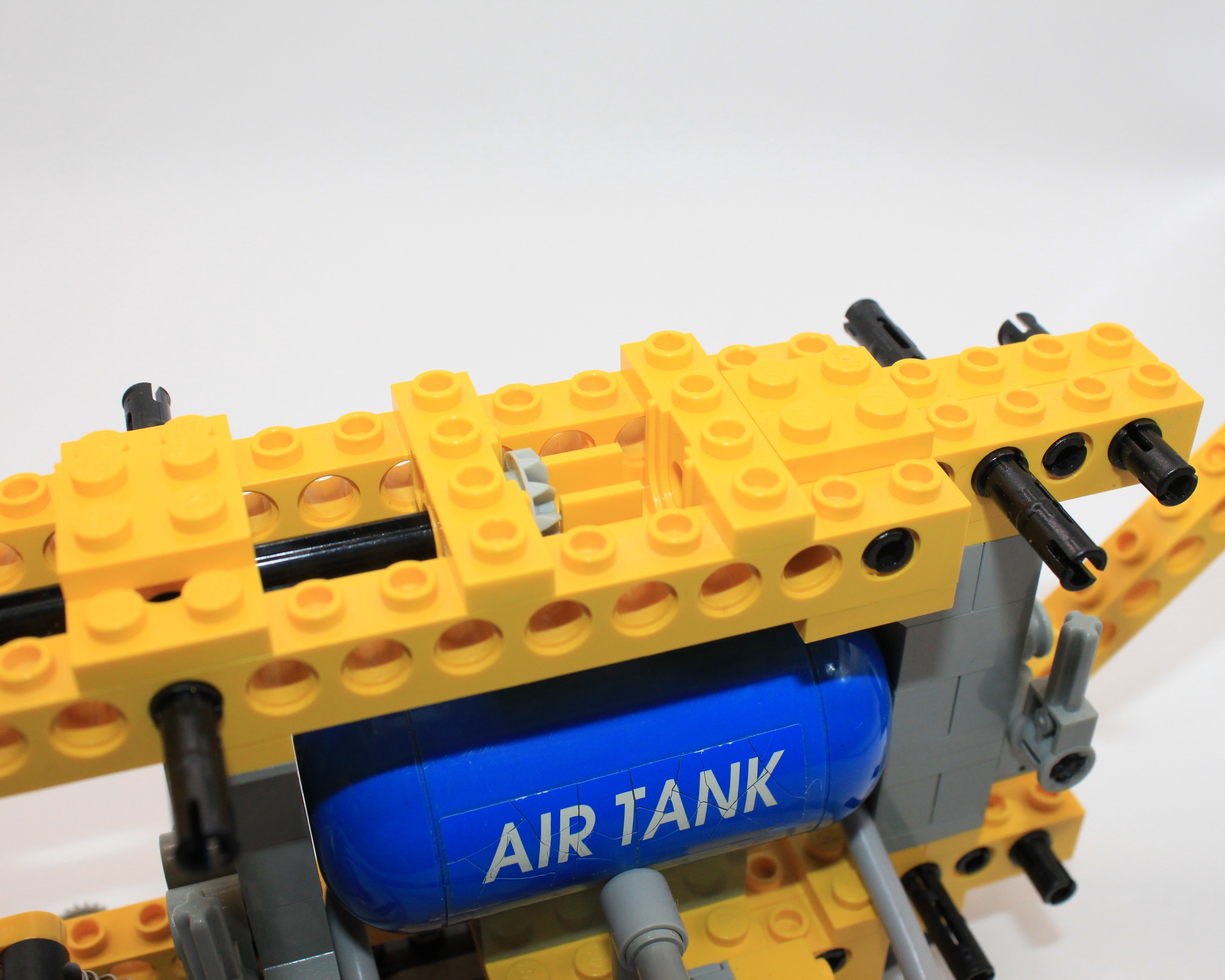
The roof section adds the “U 97” sticker and introduces the gearbox. The gearbox is interesting, it raises and lowers the visor, which is a pretty minor function. But they used proper gearbox to make the motion smooth and controllable. The steering wheel that drives it also works as a visual cue for the hatch mechanism. One part, two purposes. I like that.
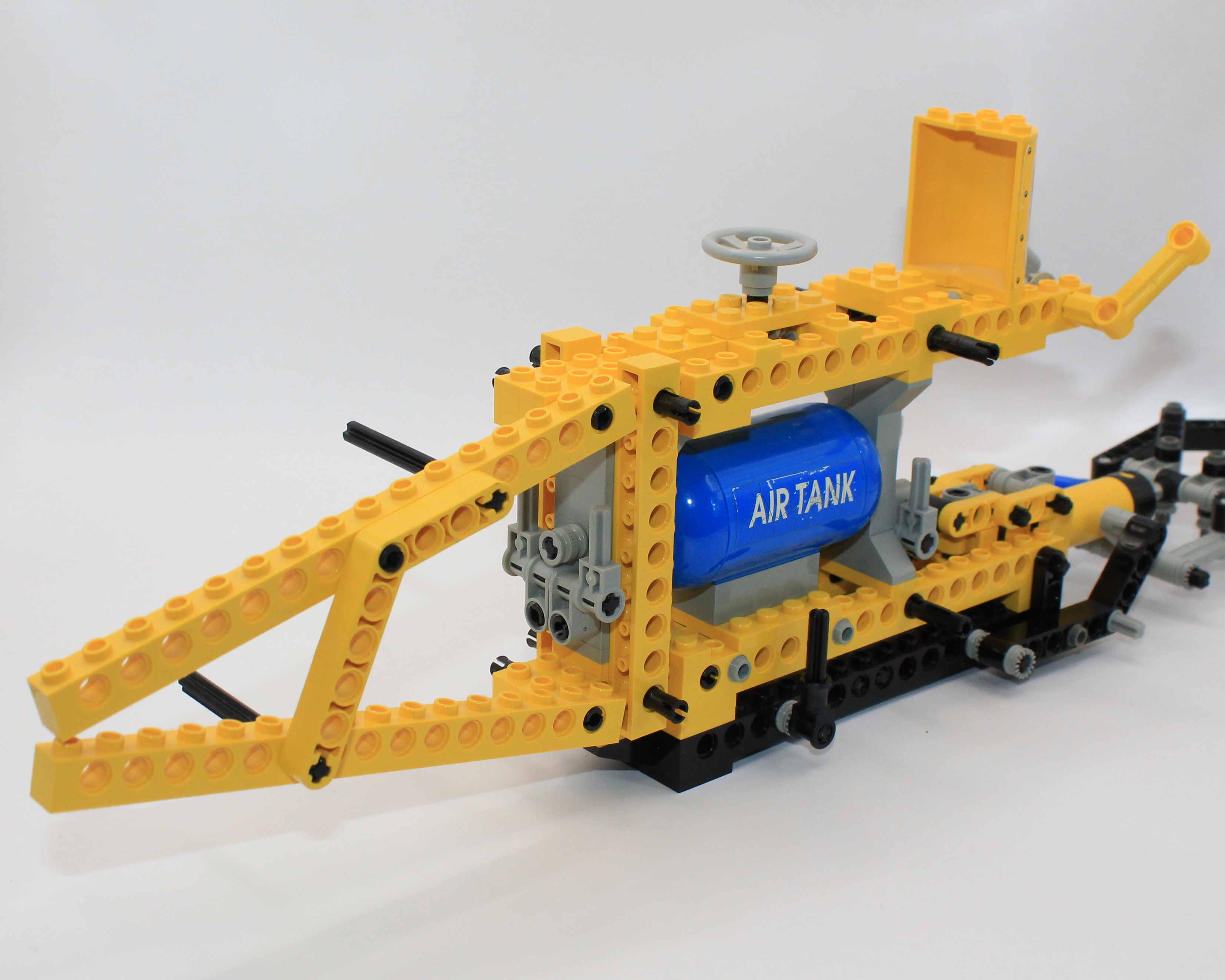
Structural integrity is a real concern through the mid section of the build. The framework is open and cross bracing is sparse. Step 24 fixes this with two beams that lock the top to the bottom and the difference is immediate. What felt like a loose collection of parts suddenly feels like a proper object.
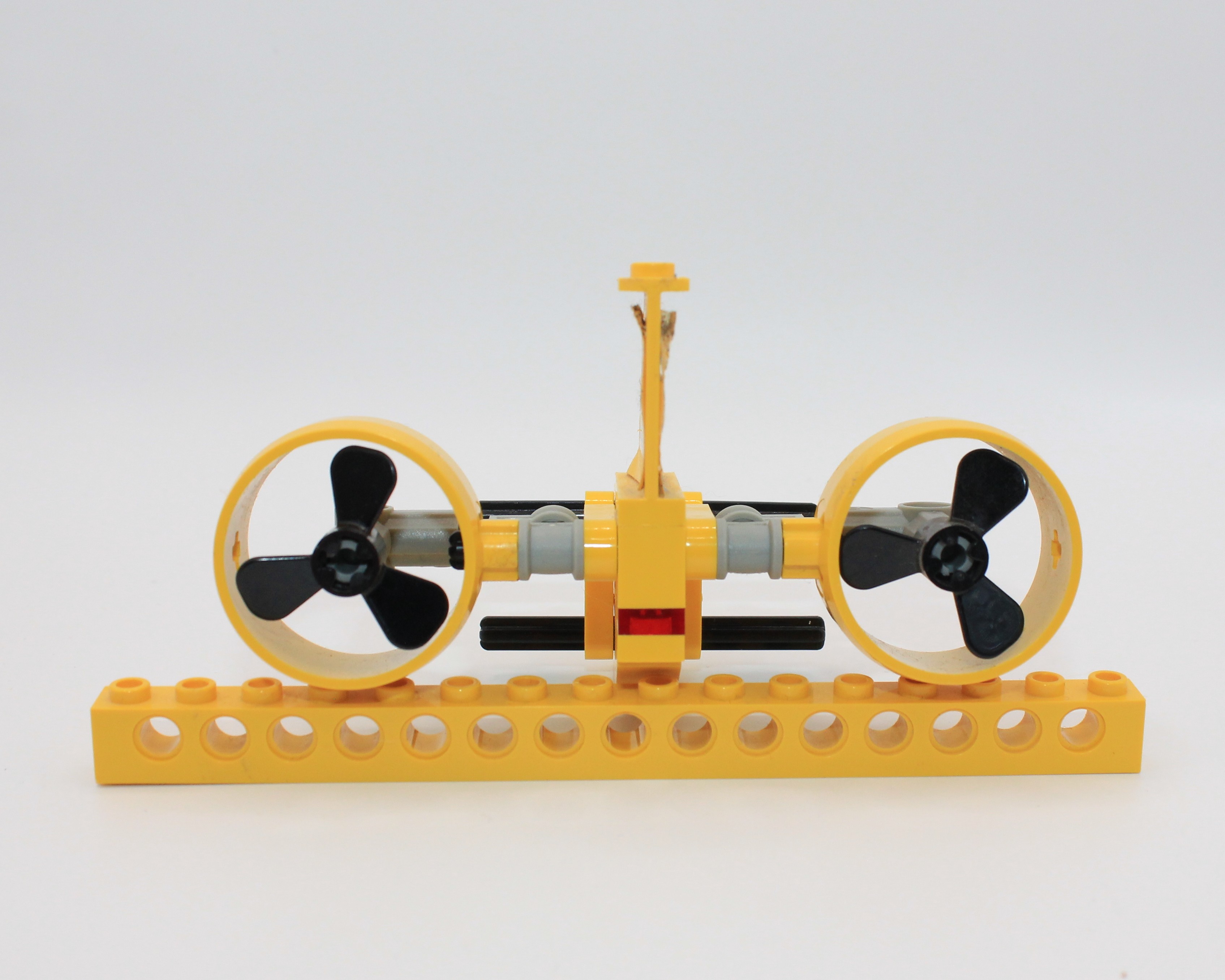
The propellers go inside the Technic Cylinder 4 x 4 x 1 2/3
Yellow
Technic Cylinder 4 x 4 x 1 2/3 with Axle Holes
Yellow
with a technique that leaves them completely free spinning. It is an elegant solution that looks more sophisticated than the part count would suggest.
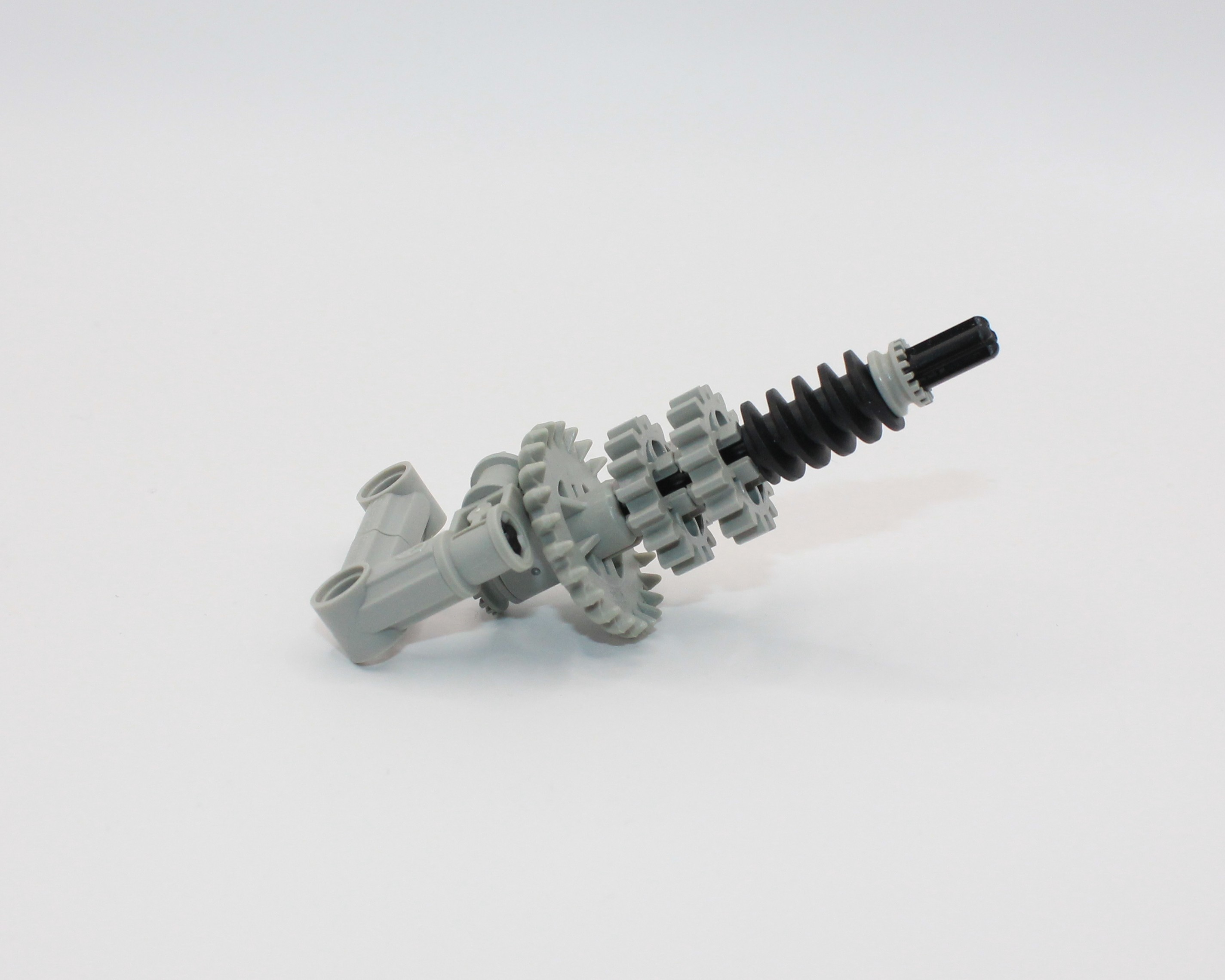
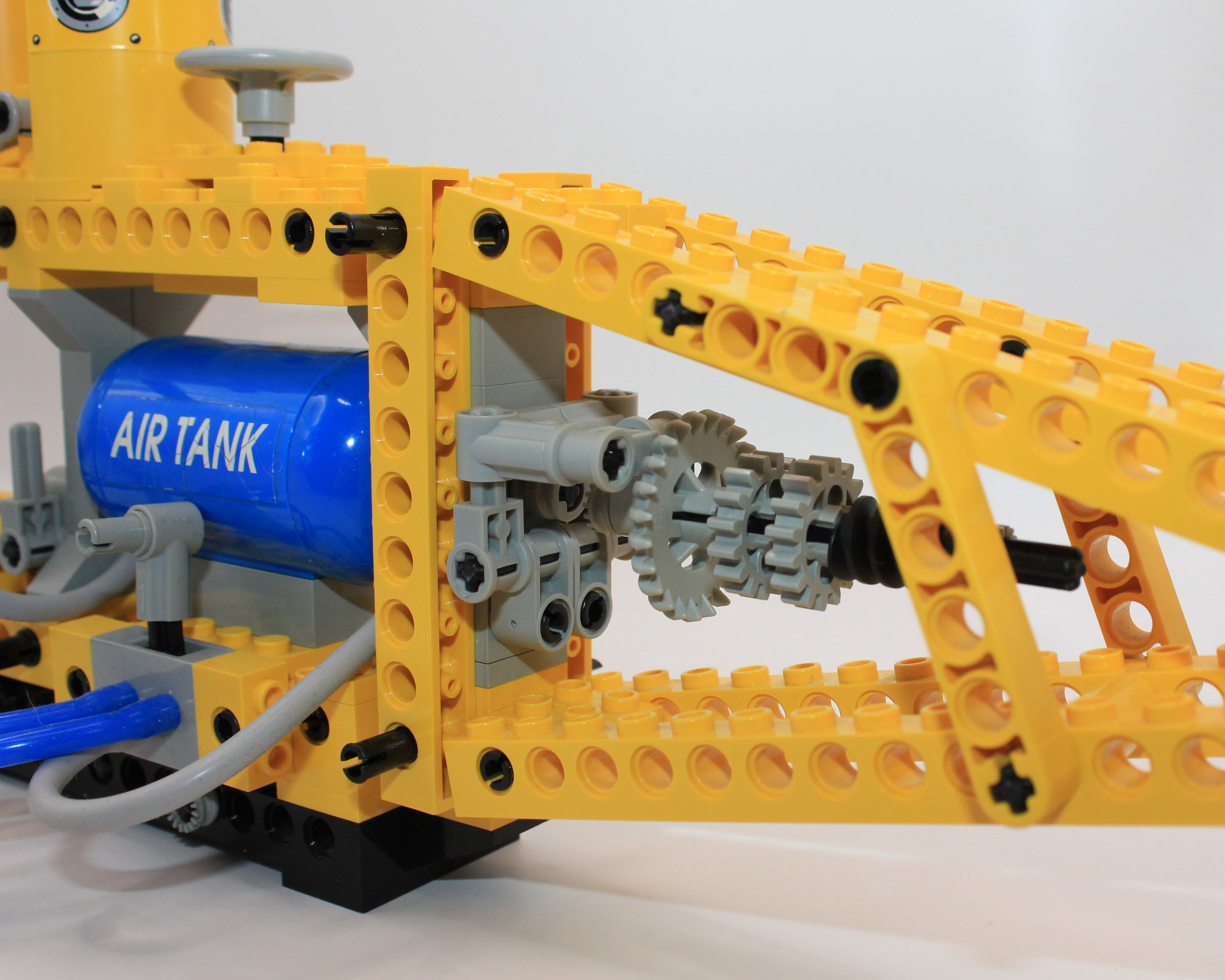
There is also a small underwater drill module, with twelve parts, that attaches to the aft of the sub when not in use. Simple but detailed. The fact that the sub has a dedicated spot for it feels considered.
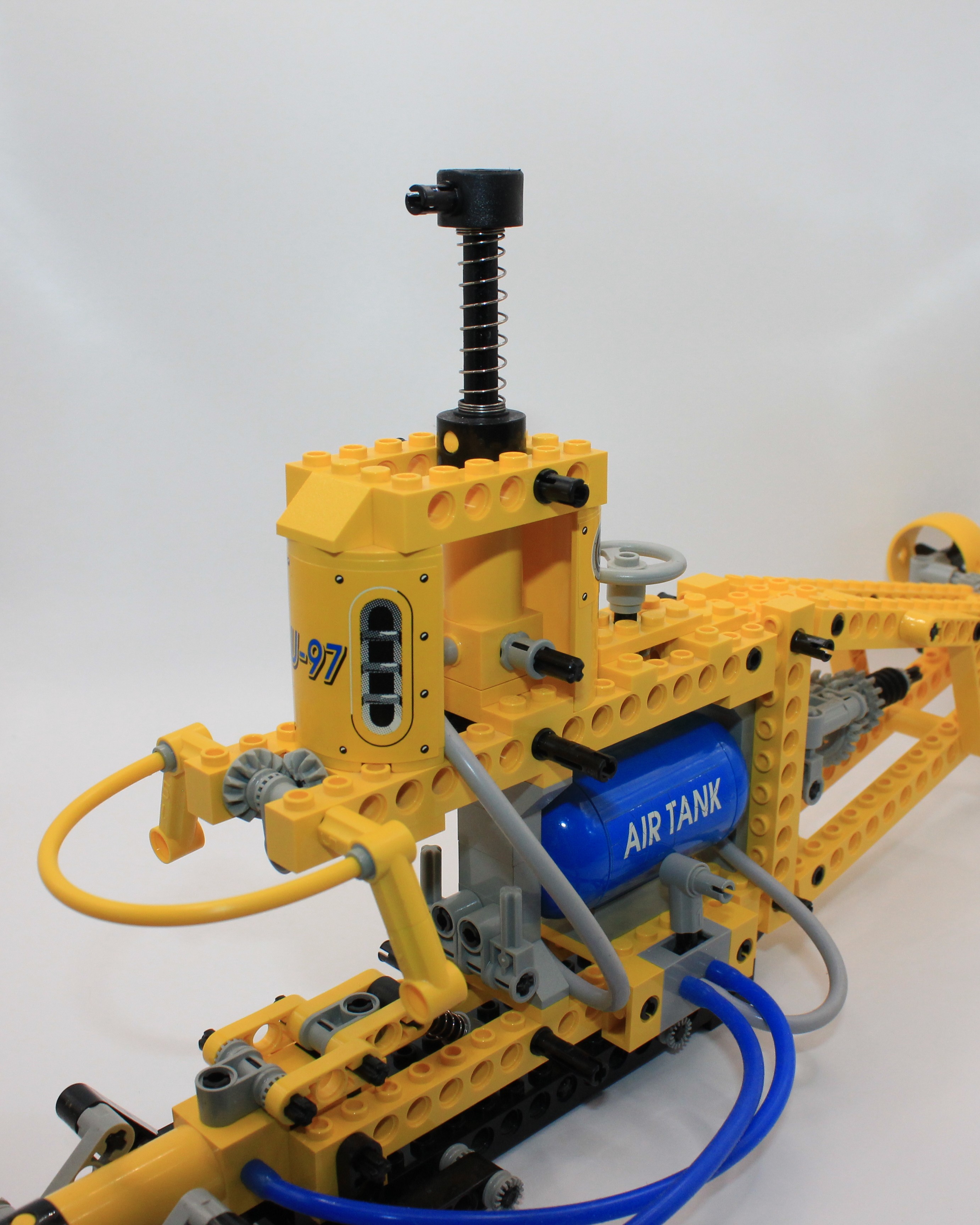
The pneumatic pump sits on top and a single Technic Pin
Black
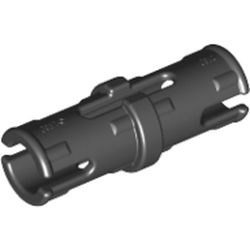 Technic Pin with Friction Ridges Lengthwise and Center Slots
Black
that turns it into a periscope visually. Again, One part, two jobs. This kind of thinking is multiple places in this set and it is one of the things I like about it.
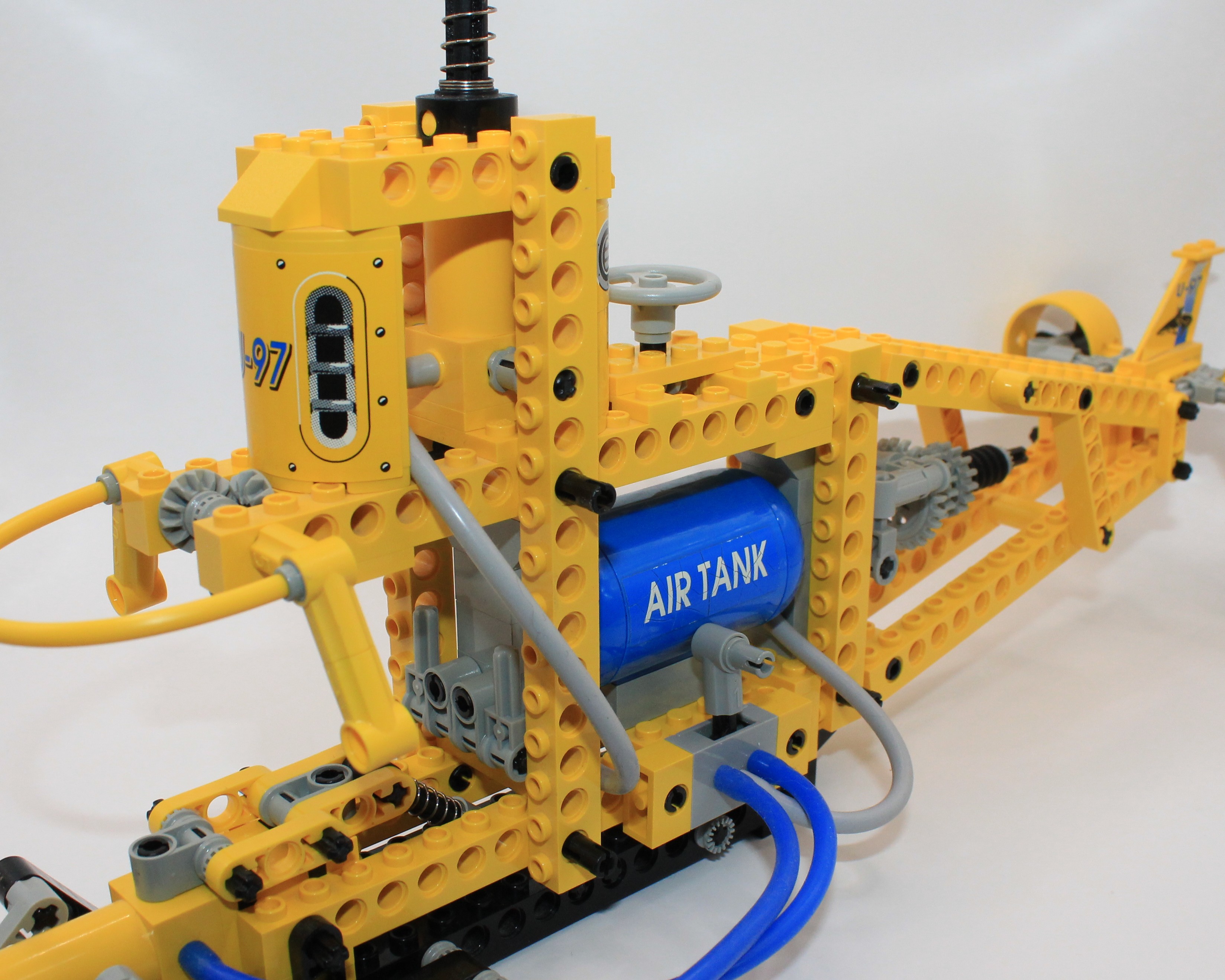
There is one step I have been annoyed by since I was ten years old. A cross beam that has to go between an already installed hose and the sub’s body. The hose gives you enough room, technically. But you are holding three things at once and it just feels wrong. LEGO could have put that beam in two steps earlier and nobody would have noticed. I noticed and twenty years later, I still notice.
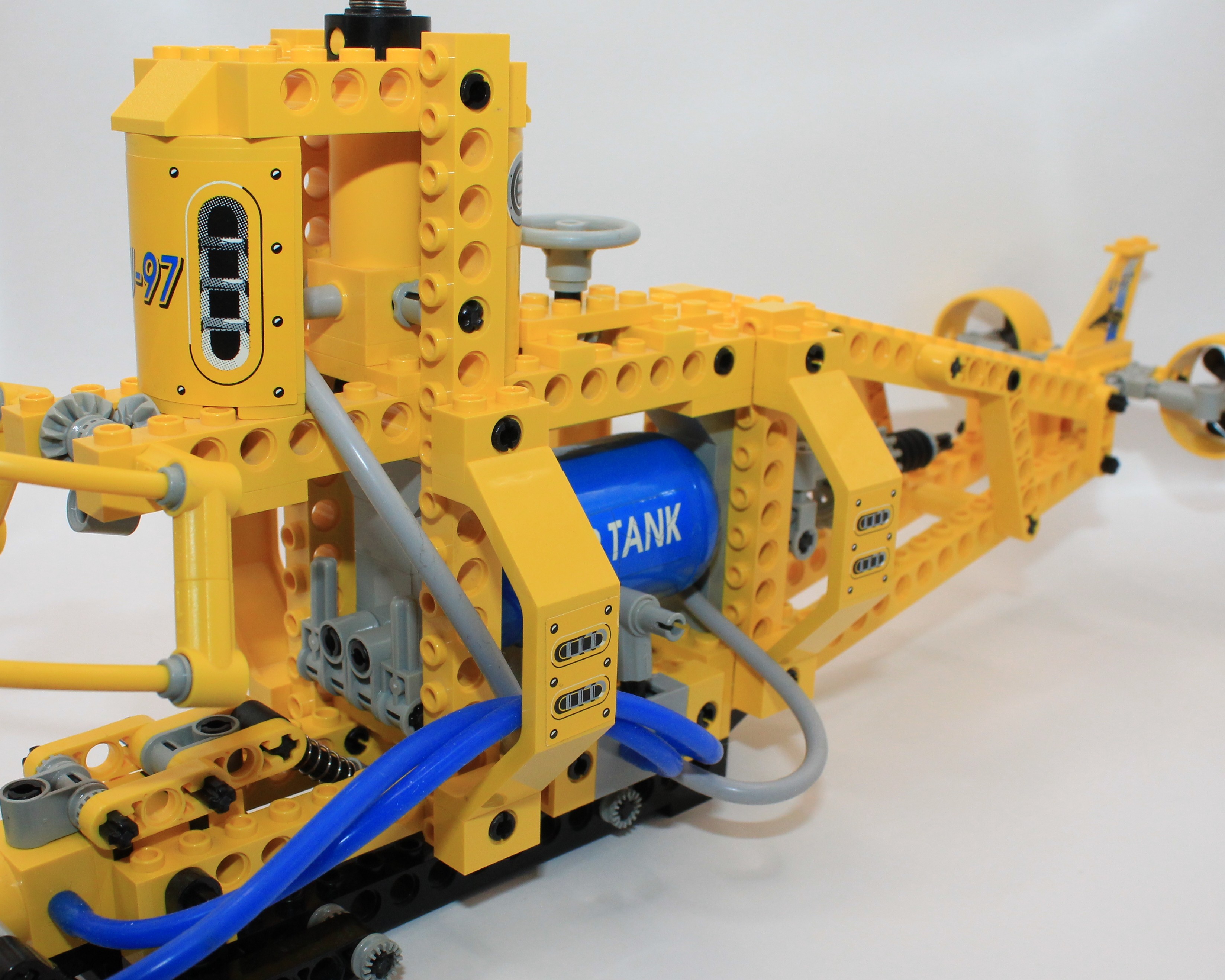
Near the end the four 3 x 2 x 6
Yellow
3 x 2 x 6 Panel
Yellow
pieces go on, two per side, giving the sub a more rounded silhouette. The first one also guides the pneumatic hoses and keeps them from flopping around.
The Finished Product
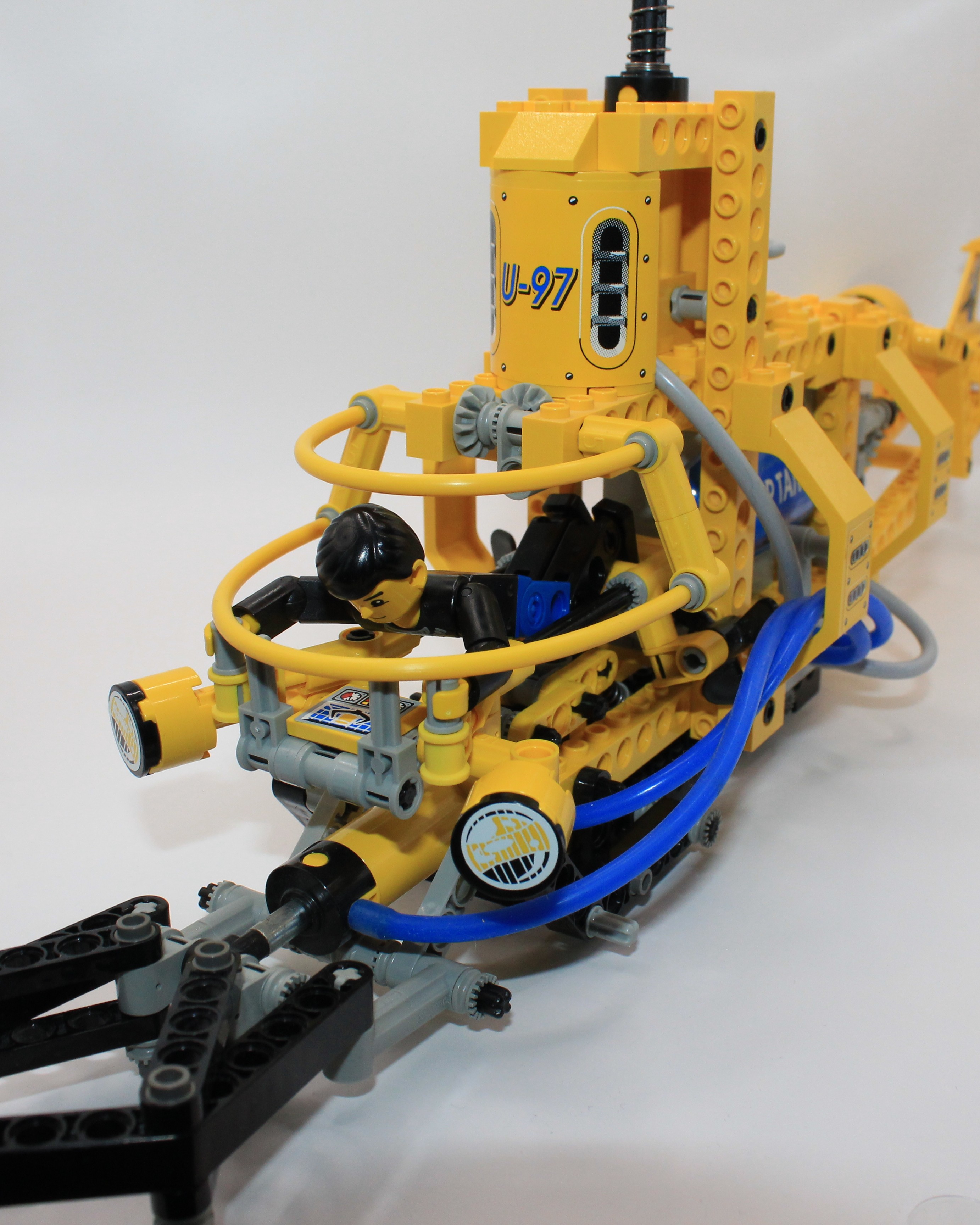
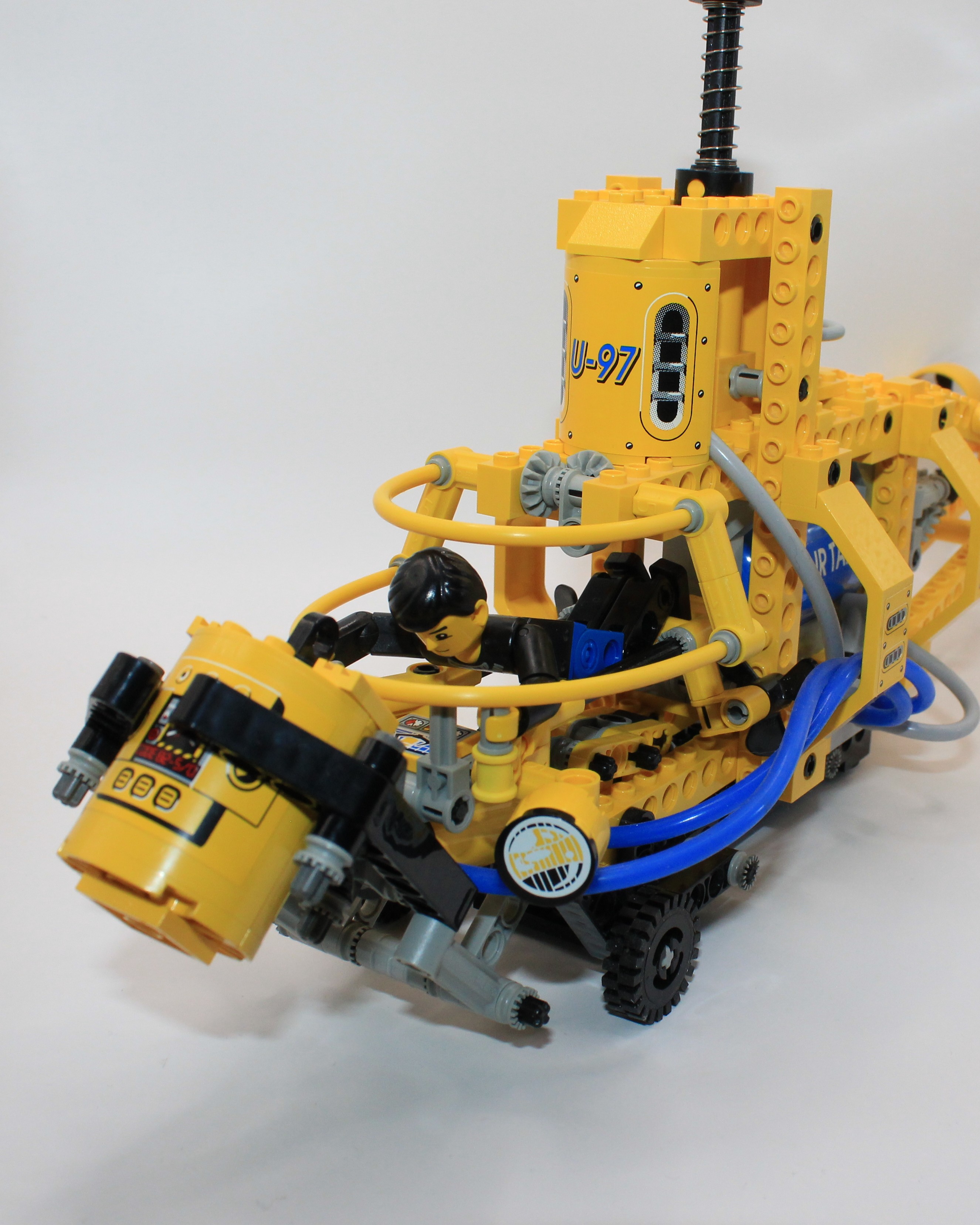
The finished Search Sub is not a realistic submarine. It does not try to be. It has wheels, for starters. Small rollers added in the final steps so you can drive it around on a table when you are done pretending it is underwater. That detail tells you exactly what kind of set this is. It is a toy first and foremost. The yellow body, blue accents, and grey mechanical bits make a color palette that is busy in exactly the right way for a playset.
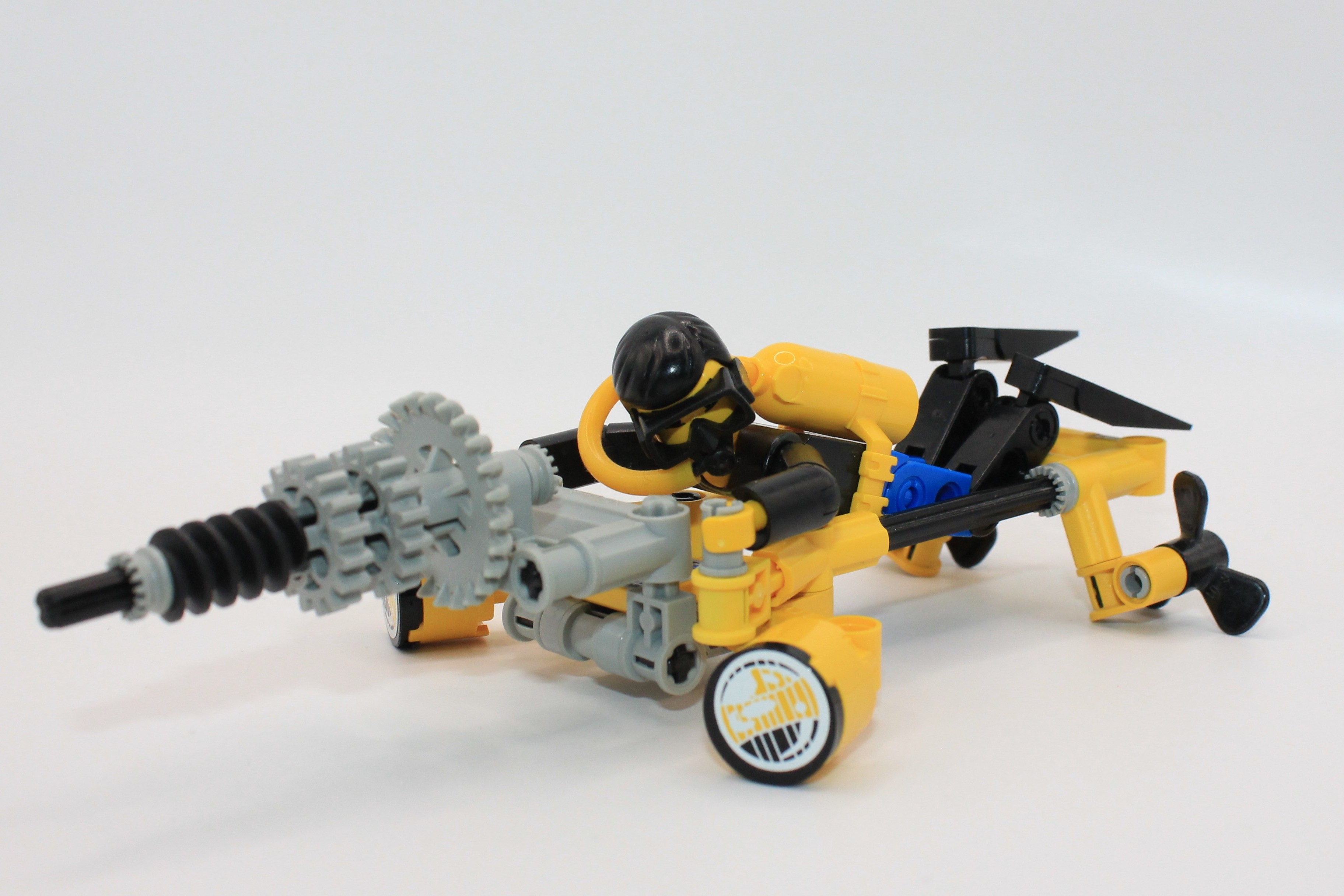
It is a comfortable size for a shelf. Big enough to notice, but not awkward. The mini sub clips neatly onto the front and adds a sense of scale without cluttering the overall shape.
The pneumatic system still works after nearly thirty years. You can pump the air tank and watch the grabber move with real pressure behind it. That is kind of remarkable for a toy from 1997.
There is one flaw I want to flag. When the mini sub is mounted and the diver is seated in it, using the front grabber pushes the mini sub upward at an angle. The grabber arm hits the underside of the mini sub. Nothing breaks. But it is an oversight that should have been caught in testing. I remembered this flaw the moment I reached for the grabber after finishing the build. Some things live in your brain for three decades.
The Real Talk
The Good Stuff
The pneumatic system is the star. Moving things with nothing but air pressure, no batteries, no motors, just a pump and some hoses, felt like engineering magic in 1997 and honestly it still does. The air tank holds pressure long enough for real extended play without constant repumping. Not all pneumatic sets from this era could do that and the difference matters a lot for how the thing actually feels to play with.
The diver is unique. This is the only diver in the Technic figure era. Every other figure is a driver of something. This one goes underwater and the full wetsuit print, mask, flippers and air tank make it feel like a real character. Parts collectors and figure enthusiasts will know immediately what they are looking at.
The parts overall are excellent. New molds, rare colors, debut appearances across multiple categories. This set has more going on parts-wise than the piece count suggests. The blue air tank alone makes it worth serious attention from anyone building anything mechanical.
And the build is just fun. Clear progress throughout. An experienced builder probably finishes in about an hour.
The Not So Good Stuff
The grabber and mini sub issue is a real design flaw. It is not subtle. A few minutes of testing during development should have caught it. The mini sub mounting points and the grabber is a primary feature, so having them conflict is a genuine miss that I cannot fully forgive.
The mid build structural wobbliness is real too. The sub feels loose and precarious for a longer stretch than it should. It comes together in the end but younger or less experienced builders might find that stretch frustrating.
The instruction pacing is authentic to the era but dense. If you are used to modern Technic booklets this will feel demanding. That is not quite a criticism, just worth knowing before you sit down with it.
Should You Buy It?
The Search Sub is long retired so you are looking at the second hand market. BrickLink’s six month used average is around $75 right now and honestly that is too much for this set in my opinion. It is not a huge model and the price premium for a complete copy with stickers and figure is steep.
That said, I should mention I live in Denmark, where the second hand LEGO market is unusually good. I picked up four copies at prices between roughly fifteen and thirty US dollars each. Outside of Denmark you probably will not find that kind of availability but these sets do pop up on local platforms fairly regularly. If you can get a complete or near complete copy for fifty dollars or under I would go for it.
If you mainly want the pneumatic parts, the diver figure, or the air tank specifically, buying individual parts on BrickLink might work out cheaper depending on what you need.
For Technic fans with a connection to this era, for parts collectors after pneumatic hardware, or for anyone who just wants a fun and functional late nineties Technic build on their shelf, the Search Sub is worth finding. Just make sure the mask, flippers, and air tank are all there before you commit. Those are the hardest to find separately.
Final Score
Build Experience: 7/10 - Fun throughout with no really frustrating moments, and an experienced builder finishes it in an hours time.
Design: 7/10 - Solid and characterful but the grabber and mini sub interference is an oversight that should not have made it to production.
Parts Quality: 9/10 - The pneumatic hardware and the diver accessories is what gets the high score.
Playability: 10/10 - Multiple interactive systems, a mini vehicle, and a pneumatic grabber that still works beautifully after nearly thirty years.
Overall: 8/10 - A very good set that holds up but nostalgia is also partly at work here.